
Stress is an axis before it is ever a mood.
A pituitary signal drives adrenal cortisol, and the cost is set by how quickly it returns to baseline (ACTH, HPA). Recovery is carried by endocannabinoid tone, by mood transmission, and by the bonding hormone that makes company restorative (oxytocin). Under inflammatory load tryptophan is diverted away from serotonin into an alternate branch (kynurenine).
An axis that returns to baseline quickly pays out everywhere. Calm, sleep, mood and motivation are the near field; BDNF, the plasticity switch, the memory chemical and quieted overexcitation are what recovery is spent on; the reward circuit and opioid receptor signaling decide whether rest registers as relief at all. Further out, brain inflammation and body-wide inflammation fall, antioxidant defense, the longevity gene and nerve insulation hold, and an axis no longer always on returns what it had been spending: mitochondrial energy and muscle stop being drawn down, testosterone and immune support recover their ground, and blood-sugar handling, cholesterol, recovery and weight settle behind them.
Ten primary pathways of the forty-eight it targets. A pathway opens only on graded, published evidence, shown with its source at the ingredient level.
Educational only. Not evaluated by the FDA.
The story of Trinity (Mind Body Spirit Harmonizer)
Trinity — ‘The Triad’ — for a mind that has forgotten how to be at rest. Chinese medicine speaks of Three Treasures. Essence, the deep reserve you are born with (精, Jing). Energy, the vitality you spend each day (氣, Qi). And spirit, the clear, settled mind that looks out through your eyes (神, Shen). When the three are in balance, a person is steady, warm and awake. When one is drained, the others strain to compensate, and the whole of you feels it. Modern physiology describes the same triad in its own vocabulary. It begins with an alarm that should sound only when danger is real and fall silent once it has passed (psychological stress). In many people it has learned to sound all the time, as a constant, low hum of dread with no object (anxiety). Behind it runs the stress axis, the chain from brain to adrenal glands that floods the body with cortisol (HPA axis, cortisol), meant for emergencies and ruinous when it never switches off. Against that alarm the body has its own counterweights. A balance system that tempers the nervous system’s reactions, much as a governor tempers an engine (endocannabinoid signaling). A hormone of trust and connection that softens the edge of fear when we are with people we love (oxytocin). And the quiet capacity to take a blow and return to center (stress resilience), which is what the old texts meant when they spoke of a settled spirit. When those counterweights hold, what follows is the even keel (mood): not constant happiness, but a floor you do not fall through. And with it comes the openness that lets good company and good surroundings do their work on you again (social and environmental factors). Trinity is built on that triad. The stress axis quiets, and the reserve stops draining. The counterweights come back into play: the balance system, the connection hormone, the resilience that lets you recover. And the mood that rests on all of them steadies. An axis that comes down takes a great deal with it. Tryptophan stops being diverted and goes back to making the mood chemical it was meant for; calm, sleep and motivation follow, while the reward circuit and its opioid signaling decide whether rest registers as relief at all. The memory chemical and the BDNF signaling beneath it rebuild what stress had been spending, nerve insulation holds, and alertness returns without having to be forced. Growth signaling steadies, inflammation settles body-wide, the histamine response quiets — hives included — and antioxidant defense, blood flow and orderly clotting steady on that same axis. What the body stops spending it starts keeping: muscle, testosterone, immune strength and resistance to infection, with sugar burning, blood-sugar support, fasting insulin, cholesterol and weight settling behind them, and the kidney, vision, iron-safe membranes, the longevity gene and recovery itself reading the same return. Three treasures, one person. When they are in balance, rest is not something you have to work for.
Mood & calm reset — the anti-anxiety triad.
★ 5.0 · 200:1 · $99








The studies, ingredient by ingredient
A meta-analysis of randomized trials: better cognition and speed of attention; in older adults, less anxiety and depression too.
In a randomized trial in generalized anxiety disorder, anxiety scores fell significantly against placebo.
Randomized trial: improved Perceived Stress and insomnia, lower hair cortisol, buffered acute-stress cortisol/amylase vs placebo.
In a randomized trial in mild cognitive impairment, cognition improved against placebo; further randomized trials tested cognition and mood in young adults, over one day and over 28 days.
Preoperative-anxiety randomized trial reduced anxiety with minimal sedation; benzodiazepine-tapering controlled study.
Neurasthenia randomized trial reduced fatigue and improved well-being.
In a randomized trial in depression, scores on the standard depression rating scale improved; a second randomized trial tested it in stress-related fatigue.
In a randomized brain-scan trial, a single serving quieted the amygdala's reaction to fearful faces, and a second randomized trial eased induced anxiety.
Four double-blind trials in healthy adults: better working memory and attention, with calmer mood.
In 72 chronically stressed adults, trait anxiety fell 16.8% against placebo.
Measured in people: a randomized placebo-controlled trial in older adults found significant gains in memory, attention and overall cognition against placebo.
In a randomized human trial its polysaccharide improved self-reported memory and thinking complaints; in animals it restored memory through the CREB and acetylcholine systems, raising nerve growth factors and acting against amyloid-beta.
Among the best-evidenced antidepressants here — multiple randomized trial meta-analyses.
In a six-month randomized trial in mild cognitive impairment, visual memory improved; in a randomized trial in chronic fatigue, mental-fatigue scores improved.
Across 9 randomized trials and 558 people, lowered perceived stress, anxiety scores and cortisol against placebo.
Tested against placebo in adolescents with low mood and in a well-being trial; works on BDNF and serotonin.
Seven trials, 1,384 people. Ba Ji Tian oligosaccharides matched standard antidepressants head to head — a relative risk of 0.99, which is the statistical way of saying equal, not weaker. China's regulator approves them for mild-to-moderate depression. The mechanism was worked out separately: it lifts monoamine signaling and the brain's own growth factor, and blocking the PI3K relay abolishes the effect, which proves the route.
In a randomized trial in menopausal women, anxiety improved; underneath, it raised BDNF, steadied the stress-hormone and adrenal axis, and supported new nerve cells and dopamine signaling in the reward circuit.
Measured in people: in a placebo-controlled trial cortisol fell 16%, with improvements in tension, anger and confusion. It calms the stress axis and normalizes testosterone. In mice the anti-anxiety effect matched diazepam. Animal safety testing found no adverse effect at the highest dose tested.
In the study read, the effect was reversed by prazosin, which points to a noradrenergic alpha-1 route.
Works on the brain's noradrenaline and dopamine and its calming GABA system (each shown causally), tempers glutamate signaling, and raises the growth factors BDNF and GDNF with the Nrf2 antioxidant defense.
Its calming, sleep-deepening effect runs through the GABA-A receptor (drugs that block that receptor cancel it), with a serotonin component; its sanjoinine A raises the enzymes that make GABA.
In animals moringa acts as an antidepressant and eases anxiety through the brain's calming GABA system, a route proven by blocking it; memory gains ran through acetylcholine and new nerve growth.
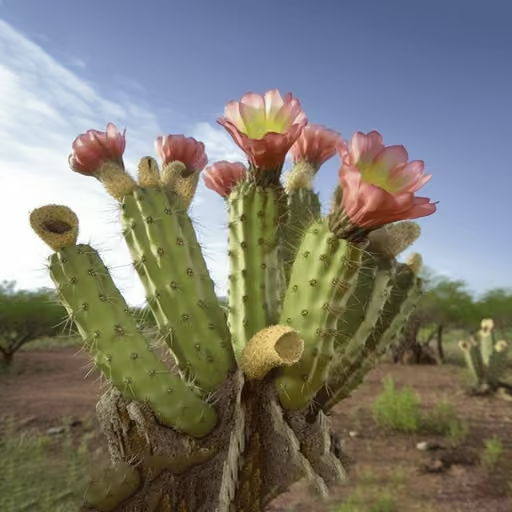
In mice, hoodia lifted depressed behavior and raised the brain's dopamine, noradrenaline and serotonin, an effect that vanished when those signals were blocked.
Serotonergic 5-HT1A (causal) + GABA-A + HPA-axis. Causal: anti-immobility in mice reversed by WAY-100635/pindolol (5-HT1A antagonists) but not 5-HT1B/2A (Kim 2007); anxiolytic in EPM abolished by pindolol.
Mice stopped giving up in the swim test, and dopamine-blocking drugs canceled the effect outright while serotonin blockers left it untouched — which pins the action to dopamine instead of inferring it. That causal test is the strength here.
Mucuna pruriens's seeds carry 4-6% natural L-DOPA, so it interacts with Parkinson's medication and MAOIs and is not for anyone with psychosis — settle that first.
Fast-acting in a way most plant antidepressants are not: mice stop struggling within a short window, and the effect is abolished outright when the AMPA glutamate receptor is blocked.
Its β-asarone reversed depression-like behavior in chronically stressed animals, with more new nerve cells and more BDNF.
Rats worn down by weeks of unpredictable stress got their behavior back on the flower's flavonoids, with fewer dying cells in the memory region.
Its fruit extract improved memory in animals, raising the learning signals and BDNF of the hippocampus; its adenosine is the calming compound.
In sleep-deprived animals pearl powder restored maze-learning performance and corrected protein changes in the memory center of the brain.
Dendrobium's alkaloid rescues memory in mice, and the proof is unusually hard: strip out the NLRP3 inflammation sensor and the protection disappears completely, so that pathway is required, not just present.
Paeoniflorin restores serotonin, noradrenaline and dopamine in rats after a drug has stripped them out.
Mice on this mushroom hesitated less on the elevated maze and moved more freely in the open field.
Astragalus flavonoids lift mood in animal models by calming the stress-hormone axis, lowering an excitatory brain signal and helping rebuild the insulating sheath around nerve fibers.
Blocking the antioxidant regulator abolishes the stroke protection.
In mice, chaga slows the enzyme that clears acetylcholine and brings the transmitter back up, and spatial memory improved in mice bred to develop Alzheimer's.
Ceylon cinnamon lifted mood in animals by raising the brain's main growth factor, and protected memory by hindering amyloid clumping and tau tangling.
Its polysaccharides act against amyloid and tau, protect the connections between nerve cells, raise the Nrf2 antioxidant defense and support acetylcholine signaling, with a gut-brain route as well.
Cordycepin restores serotonin and noradrenaline, raises brain growth factor, steadies the stress-hormone axis, damps inflammation, shifts the excitatory and calming signals and the sleep hormone, and counters fatigue by raising cell energy.
Lifts mood through BDNF and the brain's monoamines; its ferulic acid acts on serotonin and the stress-hormone axis, Z-ligustilide on calming neurosteroids, and coniferyl ferulate keeps nerve cells from dying.
In animals it raises serotonin, noradrenaline and dopamine, steadies the stress-hormone axis and pushes back fatigue.
Sedating and mildly anxiety-easing in animals: it deepens barbiturate sleep and works through GABA and serotonin channels, while its flavonoids prompt nerve growth factors and protect memory.
Its liquiritin fraction raises serotonin and noradrenaline and strongly inhibits human monoamine oxidase in the laboratory.
Chuanxiong's tetramethylpyrazine reaches the brain, blunting the calcium-glutamate overload that kills neurons and acting against inflammation, oxidation and cell death, while keeping its barrier intact.
Its ruscogenin protected the brain after stroke by quieting the NLRP3 inflammasome and the NF-κB inflammatory switch and keeping the blood-brain barrier sealed.
Notoginsenoside R1 lifted mood behavior in two demanding rodent settings.
Polygonatum sibiricum's polysaccharides raise serotonin and noradrenaline in animals and bring the stress hormone down.
Serotonin up, glutamate down, the stress axis reset and an inflammation switch quieted — all measured in animals.
Mice on the extract lifted out of depressed behavior, and brain tissue held up better after stroke; in Alzheimer's work it stimulates nerve growth factor and lowers amyloid-beta 42.
Shiitake's beta-glucan kept mice on a fattening diet from losing cognitive ground, working upward from the colon: gut flora shift, inflammation falls, brain growth factor and synapses hold.
A Pfaffia root rich in the plant steroid 20-hydroxyecdysone.
Bark extract blunted chemically induced anxiety in animals by working on serotonin, dopamine and GABA channels at once, while its arjunolic acid protected the blood-brain barrier after stroke.
Turkey tail's glucans, fed to mice whose brains were inflamed by sepsis, cut the amyloid and tangled tau that mark that damage and brought synapses and behavior back.
Its catalpol acts on the brain's monoamines, BDNF and the stress-hormone axis, quiets the NLRP3 inflammasome (confirmed in animals lacking it), raises antioxidant defenses and supports acetylcholine for memory.
Acts against amyloid, preserves acetylcholine by slowing the enzyme that breaks it down, supports dopamine and nerve growth factor, and eases cell stress and inflammation through echinacoside and acteoside.
Osthole, the seed's main active, settles anxious behavior in animals and holds memory steady while amyloid builds, keeping nerve cells from triggering their own death program.
Loganin eased anxious behavior in mice bred to develop Alzheimer's.
Against a drug given deliberately to blank memory, mice on cuscuta still remembered, with brain acetylcholinesterase lowered and antioxidant enzymes restored.
In a mouse neuroinflammation model, cynomorium extract eased depression-like behavior, with fewer inflammatory factors in the hippocampus and the brain's immune cells held back from their inflamed state.
Its peptide protects nerve cells through SIRT1 and the Nrf2 antioxidant defense, alongside the growth factors IGF-1 and EGF; its uridine improved cognition by changing how the brain's immune cells use energy.
Its flavonoids, icariin and the epimedins, steady the stress-hormone axis, raise BDNF and the brain's monoamines, calm inflammation in the brain and support new nerve cells and connections; they also act on the PDE5 and cGMP signal.
Chlorogenic acid reaches the fluid around the brain and pushes serotonin release at the synapse while shielding neurons from inflammatory damage.
No experiment has yet blocked one of those steps to show which carries the effect — and it repeats what Epimedium already brings.
Its oleanolic acid improved memory in Alzheimer's models by raising the NMDA-receptor signaling behind learning, and related Ligustrum lucidum triterpenes rescued synaptic plasticity in Alzheimer model mice.
Its N-feruloylserotonin eases stress and anxiety through a melatonin-like serotonin route, and its ecdysteroid, 20-hydroxyecdysone, acts as an adaptogen through Nrf2 and SIRT6, lowering the stress hormone.
Root attenuates behavioral deficits + raises monoamines in a propionic-acid model (root > leaf).
Tribulus raises serotonin, blocks the enzyme that breaks it down, and damps a brain-inflammation pathway; it also acts on testosterone.
African mango seed restored memory impaired by a high-fat diet, through the AKT and CREB survival pathway, relief of cell stress and the AMPK and SIRT1 energy switch.
Given to rats before blood flow to the brain was briefly reduced and then restored, beta-caryophyllene, found in the essential oils of many food plants, held the brain's endocannabinoid signaling steady.
Shown for total transparency — the weakest-evidence tier (traditional use or early / in-vitro signals only). Disclosed here for completeness: these carry no claims and are deliberately kept out of the recommendation engine.
Two of the aporphine alkaloids in blue lotus act on dopamine - one directly at the receptor, the other by blocking reuptake - in cell and animal work.
A phytoecdysteroid source with a long anabolic and adaptogenic tradition.
A nutritive tonic, about 70 percent protein, with amino acids, B vitamins, iron, calcium and zinc, plus the antioxidant enzyme superoxide dismutase and an anti-inflammatory compound, polyrhacitide.
In immune cells provoked into inflammation, snow lotus extract suppressed the cytokine alarm through NF-kB, and it carries the brain-active flavonoids rutin and syringin.
These grades describe the maturity of the published science for each ingredient — not a claim that the product treats, cures, or is clinically proven for any goal. These statements have not been evaluated by the Food and Drug Administration. This product is not intended to diagnose, treat, cure, or prevent any disease.