
One lipid class decides whether stored fat is merely abundant or actively harmful.
Ceramides interrupt insulin signaling at the cell and switch on inflammatory transcription (NF-κB), which is how two people carrying the same cholesterol and the same visible fat diverge in what that fat costs them. The liver fat fraction follows them, this being where the species accrue first. Mass is the measure everyone takes; this is the one that decides.
Lowering a lipid species that interferes with signaling reaches well past the species. The enzymes that make and clear it are the levers — ceramide synthase, sphingomyelinase, the ceramide-clearing enzyme and the first step of the pathway — and fat-overload cell damage is what they hold off. Downstream sit fasting insulin, blood-sugar handling and lowered liver sugar, the fat-burning hormone and the switch that stops fat storage, mitochondrial energy, cellular cleanup and worn-out cells cleared, antioxidant defense and the master antioxidant, the gut barrier, blood flow, eased ER stress, the kidney and weight.
Five primary pathways of the thirty-four it targets. A pathway opens only on graded, published evidence, shown with its source at the ingredient level.
Educational only. Not evaluated by the FDA.
The story of Ceramide Blocker (Lipotoxicity Neutralizer)
Ceramide Blocker — ‘The Silent Load’ — for a fat almost nobody has been told about. Start with the word, because it means two opposite things. On a skincare label, ceramides are the good fats that hold the skin’s barrier together. Inside your cells and your blood, the same family of molecules can become one of the most damaging fats you carry (ceramide, lipotoxicity). Same name, opposite story. Few people have ever been told the second half. Ceramides are built when a cell is flooded with more saturated fat than it can burn or store safely. In small amounts they are ordinary signals. In excess they become a silent load. They seep into the machinery that answers insulin and jam it, so the cell stops hearing insulin even when it is present (insulin sensitivity). They throw the body’s main inflammation switch (NF-κB). And they spill into the liver, where they help fat settle and stay (hepatic steatosis). The load is silent because none of this hurts. It surfaces only indirectly, years later: in blood sugar that creeps upward, in blood fats that drift out of range (lipid metabolism), in a liver that quietly fills. Ceramide Blocker is aimed at the load itself, not only at the harm it does. It slows the assembly of ceramides from surplus fat, helps the body clear the ones already made, and supports the orderly handling of fats so that fewer are made in the first place. With the load lifted, insulin is heard again, the inflammatory switch settles, and the liver has room to let go. The levers are enzymes. One builds the species from surplus fat, a sphingomyelinase releases more from the membrane itself, and a ceramide-clearing enzyme takes them apart again — with fat-overload cell damage being what they hold off when that balance runs the right way. An innate immune sensor is what reads the surplus as a threat in the first place. Behind them: cholesterol falls with the load, blood-sugar support and the fat-burning hormone read it metabolically, and mitochondrial energy, energy sensing, cellular cleanup and cleared worn-out cells decide what the cell does with the room it gets back. Antioxidant defense and the master antioxidant absorb the cost, eased ER stress lets an overworked cell settle, and the kidney, orderly clotting and sperm quality are where a lifted load turns up without anyone looking for it. Some weights you can feel. This one you cannot, and that is exactly why it deserves your attention first.
Lowers a plasma lipid that predicts heart attacks beyond cholesterol.
★ 5.0 · 200:1 · $99








The studies, ingredient by ingredient
Across thirty-two controlled trials, anthocyanins lowered fasting glucose, HbA1c and LDL and raised HDL.
In the PREMOTE trial of 409 adults at 20 centers, berberine lowered HbA1c, the long-term blood sugar marker, more than placebo.
Pooled randomized trials show DHA meaningfully lowers triglycerides over the long term.
Four separate pooled analyses agree L-carnitine improves liver enzymes, blood lipids and insulin resistance.
In a two-month randomized trial, muscle biopsies showed resveratrol switched on AMPK and its fat-burning signal.
Lowered ALT, the liver-damage enzyme, in a registered 24-week trial of 70 people, corroborated on gamma-GT.
Across a dose-response meta-analysis of controlled trials, alpha-lipoic acid lowered body weight and BMI.
Across six trials in 195 people, betaine took 2.53 kg of fat mass off while the scale held still.
In a double-blind trial of 150 people, chlorogenic acid significantly reduced visceral and total abdominal fat.
Choline is how the liver ships fat out as lipoprotein; with enough of it, fat no longer pools in the organ and the liver's daily work runs cleanly.
Pooled across 59 randomized trials, green tea extract raised adiponectin and lowered body weight and body fat.
In mice on a high-fat diet, reishi cut weight and restored insulin sensitivity, and its gut bacteria, transplanted alone, passed the benefit on.
Chamomile's apigenin works in the liver as well as the nerves, where it helps bring the day's cholesterol and blood fats into a more orderly profile.
In a double-blind trial of 68 postmenopausal women with high cholesterol, four weeks of Korean red ginseng lowered the sixteen-carbon ceramide that predicts heart attack better than cholesterol.
In three weeks, double-blind, glutathione raised whole-body insulin sensitivity, measured by the clamp, the reference test.
In mice on a high-fat diet, hesperidin, the main flavonoid of oranges, lowered liver fat and blood fats.
Mango leaf's mangiferin quiets NF-kB, the master switch that turns on the enzymes the cell uses to build ceramide from fat — less signal, less ceramide.
In a double-blind trial of 84 adults, mulberry fruit extract blunted the blood-sugar and insulin spike after a carbohydrate meal, more robustly than its isolated active.
Lowered liver fat and liver enzymes in 41 people with fatty liver, each their own control in a crossover trial.
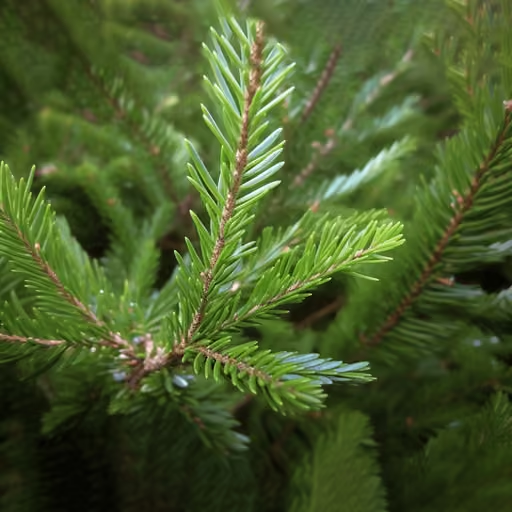
Of three hundred Korean plants screened against the enzyme that cuts ceramide out of membranes, this fir was one of three that blocked it.
Of three hundred Korean plants screened against the enzyme that cuts ceramide out of membranes, this maple was one of three that blocked it.
In diabetic mice, alpha-mangostin blocked the enzyme that makes ceramide; ceramide stopped building up in the aorta, and the vessels relaxed properly again.
Apigenin shuts off the master inflammation switch senescent cells use to broadcast damage, quieting aged kidneys and cells grown old in culture.
In a double-blind trial in people with impaired glucose tolerance, tarragon lowered HbA1c, total insulin secretion and systolic pressure, and raised HDL.
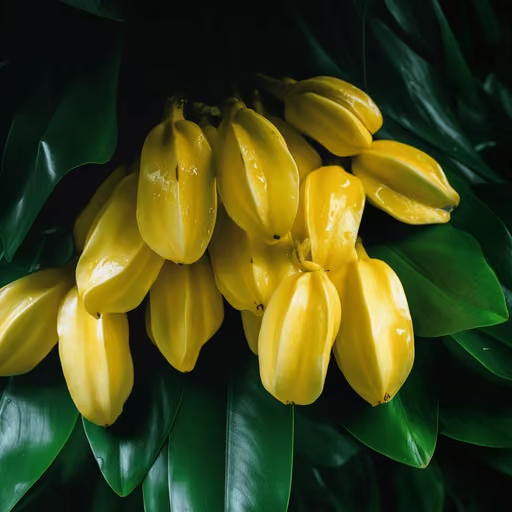
Star fruit's fiber and polyphenols bring order to cholesterol and blood fats, and draw fat out of liver tissue where it has gathered and settled over time.
Baicalin, from Chinese skullcap, lowered fat building and liver fat through the energy switch; block the switch and the effect disappears.
Birch bark's betulinic acid turns on AMPK, the energy sensor that halts ceramide assembly, so these fat-derived molecules stop building up inside the cell.
In mice on a high-fat diet, caffeic acid prevented fatty liver by way of the gut, shifting the bacteria and cutting the toxin that reaches the liver.
In rats on a high-fat diet, chrysanthemum flower extract grew larger, more numerous muscle mitochondria and lowered blood fats, liver fat and fat-tissue mass.
In liver cells injured by saturated fat, cimifugin reversed the damage through TLR4, the receptor that turns fat into inflammation.
In liver cells loaded with saturated fat, coumestrol lowered ceramide and its immediate precursor, measured directly.
Dendrobium, the orchid stem of Chinese medicine, carries polysaccharides that feed friendly gut bacteria and build a gut lining that holds firm.
Across rodent studies, rhubarb's emodin raised the energy-sensing enzyme and blocked the enzyme that commits fat to storage.
Paired with pomegranate seed oil, fucoxanthin took 5.5 kg off obese women with fatty liver over sixteen weeks, with resting energy burn rising.
Of three hundred Korean plants screened against the enzyme that cuts ceramide out of membranes, ginkgo was one of three that blocked it.
Maitake's beta-glucans draw sugar from the blood into muscle, and adjust how the liver builds and sends out cholesterol and blood fats.
Isorhamnetin, a flavonol from sea buckthorn and ginkgo, helps mitochondria multiply and burn fuel more completely, so cells produce energy with less waste.
Swallowed plainly for fifteen weeks by mice on a high-fat diet, lactoferrin lowered weight gain, visceral fat, liver fat and blood fats.
In two independent laboratories, luteolin taken by mouth raised the NRF2 defense and lowered the NF-kB inflammation switch.
In fat-fed mice and fat-loaded liver cells, lycopene restarted the clearing of damaged mitochondria, cutting fat droplets by more than a third.
In rats given N-acetylcysteine, ceramide fell in both heart tissue and plasma.
In rats on a high-fat diet, naringin kept the liver's energy sensor and fat-building switch at normal levels.
In human liver cells loaded with saturated fat, procyanidin B2 brought all five markers of protein-folding strain back down.
Kudzu's puerarin raises SIRT1 and the energy sensor above it in diabetes and heart-protection models, study after study.
In mice whose blood fats were driven up, pomegranate's punicalagin improved liver fat handling, cut oxidative damage and restored mitochondrial function.
In diabetic mice, rutin lowered liver fat, blood fats and the fat-building proteins, by a route confirmed through the energy-sensing enzyme.
In mice on a high-fat diet, salidroside lowered obesity, blood-sugar swings and liver fat, and raised insulin sensitivity markedly.
In obese mice and fat-loaded heart cells, salvianolic acid A protected against saturated-fat damage by blocking TLR4, the receptor that reads saturated fat.
Helps muscle answer insulin and guides the body toward lighter weight as sugar is burned, not stored.
An umbrella review of 50 randomized trials in 2,879 people found turmeric lowered BMI, body weight and waist.
In mice on a high-fat diet, xanthohumol from hops brought liver ceramide itself down, read lipid by lipid.
These grades describe the maturity of the published science for each ingredient — not a claim that the product treats, cures, or is clinically proven for any goal. These statements have not been evaluated by the Food and Drug Administration. This product is not intended to diagnose, treat, cure, or prevent any disease.