
One hundred culinary and medicinal spices meet an inflammation too low-grade to notice and too persistent to ignore.
Chronic low-grade inflammation is transcriptional (NF-κB) and reported by three cytokines that rise together (IL-6, TNF-α, IL-1β). Breadth is the design — many polyphenols acting weakly at one point do what no single one does alone. Absorption decides whether any of it arrives (bioavailability), and digestion, endothelial nitric oxide (eNOS), fasting insulin and cortisol all turn on that same question. Immune balance, the enzyme producing pain mediators (COX-2), the lipid messengers carrying inflammatory signaling (eicosanoids) and a TCA metabolite with a second career in signaling (succinate) belong to the same complex.
Lowering a background that was never acute pays out quietly and everywhere. Mitochondrial energy, energy sensing, fat burning and thyroid decide what a body does with fuel once inflammation stops taxing it; blood-sugar handling, cholesterol and weight move on the same relief. Antioxidant defense protects what is spared, while mood, anxiety, muscle and vision are where low-grade inflammation had been charging rent all along.
Eighteen primary pathways of the thirty it targets. A pathway opens only on graded, published evidence, shown with its source at the ingredient level.
Educational only. Not evaluated by the FDA.
The story of Spice (Anti-Inflammatory Polyphenol Powerhouse)
Interstellar 100 Spice — ‘The Apothecary’ — for the low fire that runs through a whole body. A plant cannot run. It cannot hide, it cannot fight, and it cannot call for help. So it does the only thing left to it: it makes chemistry. Every spice in your kitchen is a plant’s defense system, compounds built to survive insects, fungi and the sun, dried and ground into flavor. For most of human history the spice rack was also the medicine cabinet. This is a hundred of them, gathered in one place. What a hundred defensive chemistries share, inside a human body, is that they speak to inflammation. Not the useful kind, the sharp, short fire that heals a cut, but the low, slow burn that runs through the whole body for years (systemic inflammation). It is carried by a few loud messengers: the signal that spreads the alarm through the blood (IL-6), the molecule with two faces, protective in a wound and destructive when it lingers (TNF-α), the cytokine that starts the fire (interleukin-1β), and the courier that carries it into skin, joints and gut (IL-17). They answer to a master switch (NF-κB) and to a second alarm that rings with no germ in sight (the NLRP3 inflammasome). Even a fuel molecule can slip its job and become an alarm (succinate). The fire is also built from raw material. The body turns a common fat into its most potent inflammatory messengers (arachidonic acid), using an enzyme that the fire itself switches on (COX-2). Inflammation feeds on itself. A fire like that does not stay in one room. It stiffens the lining of the vessels (eNOS). It raises the insulin already in the blood before breakfast (fasting insulin). It keeps the stress axis on edge (the HPA axis, cortisol), unsettles digestion (digestive function) and wears away the immune system’s restraint (immune modulation). And here is why a hundred is not a scattergun. Some of these plants do little on their own and a great deal for the rest: they change how much of everything else survives the journey from the gut into the blood (bioavailability). A hundred spices together is not a wider net. It is a different mechanism. Interstellar 100 Spice answers the fire at every point: the loud messengers and the switches behind them, the raw material and the enzyme that turns it into flame, and the damage the fire does as it spreads. Breadth is only worth what gets absorbed, so absorption decides whether any of it arrives — and the spices that aid it are part of the design rather than an afterthought. Eased pain is the first thing most people notice, and a TCA metabolite with a second career in signaling is one of the quiet levers behind it. Past that, lowering a background that was never acute pays out everywhere. Mitochondrial energy, energy sensing and thyroid decide what a body does with fuel once inflammation stops taxing it; blood-sugar support, cholesterol and weight move on the same relief; antioxidant defense protects what is spared. Mood, anxiety, muscle and vision are where a low fire had been charging rent all along. The oldest pharmacy on earth, finally in one place.
100-polyphenol anti-inflammatory & anti-glycation.
★ 5.0 · 200:1 · $99















The studies, ingredient by ingredient
Lowers blood fats and the sugar curve, lifts insulin's reach, damps swelling and rouses antioxidant defense.
Network meta-analysis of 20 RCTs in 1,633 people: WOMAC pain, stiffness and knee function all improved, Boswellia analyzed separately. Dose-response confirmed in an independent multicenter placebo-controlled trial.
Cumin's aldehydes lower the cholesterol and triglycerides carried in the blood and quicken how the body burns fat — a seed that tips the balance.
In a head-and-neck trial, a third of treated patients had no mouth ulceration; every placebo patient developed it.
Drawing together six pooled analyses covering 3,224 people in randomized trials, curcumin lowered TNF-alpha, with little disagreement between the analyses.
In healthy volunteers, adding fish oil cut the IL-1β their immune cells released by 80% and TNF-α by 74%.
Human evidence on clot dissolution and platelet activity; named first among foods with antiplatelet action.
Ginger lowered systolic pressure 6.36 mmHg and diastolic 2.12 mmHg across pooled trials, with the effect strongest in people under fifty and within the first eight weeks.
Throws the master energy switch, AMPK; in a double-blind crossover, a 20-km time trial improved about 4%.
Eases the pressure blood exerts on artery walls and helps the vessel lining release nitric oxide.
A systematic review found holy basil reduced stress and anxiety symptoms and improved metabolic markers, including HbA1c.
Linalool, the scent itself, settles a mind that will not stand down — it softens the stress response and lifts mood without dulling the edges of the day.
A supercritical extract matched the reference stimulant's fat release at a small fraction of its concentration.
Omega-3 improves depressive symptoms in pregnant and newly delivered women, pooled across 8 placebo-controlled trials in 638 of them at a moderate 0.65.
Probiotics and synbiotics have a human trial for the inflammatory courier, IL-17 signaling, a cytokine that guards mucosal surfaces yet, dysregulated, drives autoimmune inflammation.
Crocin and safranal brighten mood, sharpen focus and help vessel linings make nitric oxide.
Til, the seed pressed for oil across three continents, carries sesamin and lignans that steady sugar, lower blood fats and ease the push on the wall.
Pooled across randomized trials, sumac lowered fasting glucose, HbA1c, triglycerides, LDL cholesterol and diastolic blood pressure.
Among the best-evidenced antidepressants here — multiple randomized trial meta-analyses.
In human immune cells, switches on cathelicidin and the cell's disposal machinery; a human trial has measured the first step.
Thymol-rich ajwain seed loosens trapped gas and wakes sluggish digestive juices, so a heavy meal settles rather than sits and aches beneath the ribs.
Anethole carries a gentle plant echo of estrogen — a soft hand on the cycle's hormonal rise and fall, and on the cramping that arrives alongside it.
A pinch of resin that Indian kitchens trust with lentils: asafoetida disperses gas and bloating before they build, and quiets a cramping, noisy gut.
In rheumatoid arthritis, raised blood succinate, the energy cycle's distress signal, moved back toward healthy values.
Berberine, the golden alkaloid of the root bark, turns on the cell's fuel sensor — sugar leaves the blood sooner and circulating fats run leaner.
When sugar lingers in the blood after bread or rice, bay leaf's polyphenols help insulin do its work, clearing glucose more cleanly from the stream.
Piperine holds open the door that nutrients normally slam shut, slowing the liver's breakdown so more of every companion compound reaches the blood.
Green pods of the Malabar coast — cardamom eases the force on artery walls and damps the inflammatory switch that keeps tissues quietly swollen.
Phthalides, the compound behind celery's green bite, relax the smooth muscle circling each artery, so blood presses less heavily against the wall.
Chamomile's flavone rests on the same calming receptors the brain uses to wind down, easing tension and mood.
Inulin from the roasted root feeds gut flora that blunt the glucose rise after meals, while chicory's chicoric acid stills the switch driving swelling.
Capsaicin fires the receptor that turns stored fat into warmth, and helps clear the triglycerides riding through the bloodstream.
Resin wept from a single Greek island's trees, mastic calms an unsettled stomach and helps the lining of the upper gut hold firm against acid's sting.
Cinnamaldehyde and its polyphenols act on the insulin receptor itself, so muscle takes up glucose more readily and blood sugar comes down sooner.
In a double-blind trial of 70 adults with metabolic syndrome, clove bud polyphenols lowered total cholesterol, triglycerides and LDL and raised HDL over 84 days.
Coriander seed, prized since the pharaohs, prompts insulin release when it is needed and helps muscle draw glucose out of the circulating blood.
Carbazole alkaloids in the fresh leaf slow the gut enzymes that break starch into sugar, so glucose trickles rather than floods after a meal.
Dill's feathery fronds carry flavonoids that trim the cholesterol the liver makes, thinning the fats that circulate through every artery.
Fennel lowers the inflammatory signal that sustains swelling and, through anethole, soothes the monthly cramps and hormone swing.
Galactomannan fiber thickens into a gel that slows sugar's entry, while a rare seed amino acid urges insulin out on time after eating.
A West African cardamom cousin, grains of paradise light up brown fat, turning calories to warmth — especially the stubborn deep fat around the waist.
Rosmarinic acid preserves GABA, the brain's quieting messenger, from breakdown — racing thoughts subside, stress loosens, and mood finds level ground.
Glycyrrhizin soothes the stomach's lining and thickens its protective mucus, calming the burning and churn that follow a rich or acidic meal.
Long pepper, black pepper's elder sibling in Ayurveda, carries piperine that eases the formula's actives past the gut wall and into circulation.
Honokiol and magnolol from the bark reach the brain's GABA receptors, dissolving anxious tension and quieting the cortisol surge behind a bad night.
The warm oil of marjoram helps restore a balanced hormone rhythm through the month, and relaxes the uterine muscle when cramps begin to tighten.
EPA and DHA lowered systolic pressure 2.61 mmHg and diastolic around 1.7. The response is J-shaped — that window is where the benefit sits — and it runs stronger, up to about 4.5 mmHg systolic, in people who are hypertensive, hyperlipidemic or older.
Menthol relaxes the smooth muscle of the bowel wall, so spasm, bloating and the urgent gripe of a restless bowel ease into quiet digestion.
Seed oil rich in alpha-linolenic acid and rosmarinic acid, perilla cools the inflammatory master switch and eases the allergic tightening of the airways.
The hip left after the rose falls carries galactolipids that temper NF-kB, the signal behind swelling, so stiff joints move with more ease and less protest.
Carnosic acid and cineole, rosemary's aromatic pair, protect acetylcholine — the messenger of memory — so recall comes quicker and attention holds.
Sage earned its name from salvere, to be well: it sharpens memory and, for women past midlife, cools the heat and night sweats of hormonal change.
Thymol from the Zagros highlands quiets the switch driving swelling, relaxes a cramping gut, and eases the spasm that narrows reactive airways.
Where excess androgen unsettles a woman's cycle, spearmint tea's gentle anti-androgen action lowers free testosterone and helps restore balance.
Hydroxy-sanshool, the tingle on the tongue, wakes the nerves that serve attention, and shields the brain's memory circuits from oxidative wear.
Aged in the sun, tangerine peel concentrates nobiletin and tangeretin — flavones that curb the liver's output of cholesterol and circulating fats.
Estragole and polyphenols of the French herb help muscle take up glucose and blunt the enzyme that turns stored fuel back into blood sugar.
From the Thai highlands, the purple rhizome's methoxyflavones stir brown fat into burning energy as heat, lifting how much the body spends at rest.
In a randomized trial, thyme eased period pain as effectively as ibuprofen.
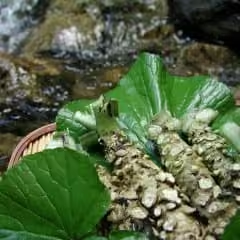
Grated fresh, wasabi releases isothiocyanates that flip the cell's defensive switch, arming neurons against oxidative wear so thinking stays clear.
Crushing a watercress leaf releases a pungent mustard oil that throws the shield switch and sets cells to build their own antioxidant and detoxifying enzymes.
Carvacrol-rich wild thyme relaxes the gut's smooth muscle, easing cramping, trapped gas and the fullness that lingers long after the plate is cleared.
The bitter of the plant that gave absinthe its name damps the inflammatory switch, turning down the signals that keep joints and tissue swollen.
Achillea's bitter tannins and flavonoids calm the switch for swelling and relax the uterus through the heavy, cramping days of the monthly cycle.
In 64 screen-heavy children over twelve weeks, eye strain fell 20% and visual fatigue 27% below placebo.
Given by mouth to rats with acid reflux, camellia bud extract halved the damage to the esophagus and markedly suppressed COX-2, the inflammation amplifier.
Chili's heat compound reaches the droplet down a road the adrenaline messenger never travels - a sensory calcium channel.
In mouse immune cells, blocking the enzyme that burns succinate turned inflammatory macrophages toward their repair state.
Works on IL-17: the signal that guards the body's surfaces and, left unchecked, drives autoimmune inflammation.
One of only three actives among fifty traditional herbs put through the same test — and the forty-seven failures are the reason the three are believable.
One of only three actives among fifty traditional herbs put through the same test — and the forty-seven failures are the reason the three are believable.
Fed to rats for ten days before 70% of the liver was removed, thymoquinone lowered liver damage and raised its ATP; after the same surgery, regrowing cells divided faster.
6-shogaol, ginger's bite, killed three lines of abnormal human liver cells in culture while leaving normal human liver cells at the same and higher strengths almost untouched.
These grades describe the maturity of the published science for each ingredient — not a claim that the product treats, cures, or is clinically proven for any goal. These statements have not been evaluated by the Food and Drug Administration. This product is not intended to diagnose, treat, cure, or prevent any disease.