
Fatigue that outlasts sleep is a failure of production, not of perception.
Energy is made at the inner mitochondrial membrane, where an electron carrier and a membrane phospholipid set throughput (CoQ10, cardiolipin), on a template replaced by biogenesis (mtDNA, PGC-1α). Supply constrains it upstream through iron-dependent oxygen carriage (heme), the stress axis sets the ceiling (HPA), and lactate handling marks where the system is working beyond it. Iron availability is gated hormonally, not by intake (hepcidin), magnesium is cofactor at every ATP step, and the sum of them is what surfaces as physical performance.
Tiredness that sleep does not fix rarely arrives alone. Thyroid sets the metabolic rate the mitochondria are asked to meet; sleep, mood and anxiety decide whether the stress axis ever lowers its ceiling, and the stress-relapse axis is what returns a person to exhaustion after a good week. Body-wide inflammation, IL-6, brain inflammation and the inflammatory alarm are the quiet tax on output, met by antioxidant defense and directed by energy sensing. Muscle, testosterone and bone health are what a depleted system stops maintaining; immune support, resistance to infection and sperm quality are what it stops defending. Blood-sugar handling and fasting insulin read that capacity in a panel, with cholesterol, the liver and weight behind them.
Seventeen primary pathways of the forty-one it targets. A pathway opens only on graded, published evidence, shown with its source at the ingredient level.
Educational only. Not evaluated by the FDA.
The story of Anti-Fatigue (Cellular Energy Endurance)
Anti-Fatigue — ‘The Second Wind’ — for the tiredness that sleep does not touch. Ask any distance runner about the moment. The legs are lead, the lungs are arguing, and then, somewhere past the point of wanting to stop, the body changes gears and the road opens again. That is the second wind. It is not willpower arriving late. It is machinery coming online. Most tired people never reach it, because the machinery it depends on has been running down for years, quietly, while everyone told them to get more rest. You have tried the rest. Weekends that end more exhausted than they began. Coffee that buys an hour and invoices the afternoon. A body that feels heavier than it weighs. The empty tank (fatigue) is real, and it is rarely about how long you slept. It is about how much fuel each cell can turn into work. That work happens in the powerhouse (mitochondrial function): thousands of small engines in every muscle and nerve cell, burning fuel to make the currency the body spends. Those engines pass current along a chain, and the chain needs a carrier to hand it on (coenzyme Q10 status) and a mineral bound to every unit of energy it makes (magnesium). The chain is held together by a lipid that also raises the alarm when it is damaged (cardiolipin). Each engine carries its own blueprint, separate from yours (mtDNA integrity), and blueprints wear. Worn engines throw sparks (mitochondrial ROS leak), and if the damage mounts, a gate opens in the membrane that the cell cannot close again (the mitochondrial permeability transition pore, mPTP). A tired cell lives nearer to that gate than a rested one. Then there is supply. Fuel is useless without oxygen, and oxygen needs a ferry (iron status) and a ring to ride in (heme synthesis). Together they set how much oxygen your blood can actually deliver (oxygen-carrying capacity), and a shortfall anywhere on that line feels, from the inside, exactly like laziness. And here is the cruelty. The system built to rescue you in a crisis is the one that drains you in a long one. The stress axis is meant to spike and settle (HPA axis, cortisol). Held up for months, it spends the very reserve it was meant to protect, and the fatigue it causes looks like a reason to push harder. The harder you push, the more it spends. None of that is a character flaw. It is a design that assumed emergencies would end. So Anti-Fatigue works on both halves. It quiets the stress axis so it stops spending what you do not have. And it asks the body to do what training does: build more engines (mitochondrial biogenesis), commissioned by the master regulator that orders them built (PGC-1α biogenesis). More engines raise the ceiling on effort (aerobic capacity) and shrink the acid backlog that makes hard work burn (lactate), so the next effort starts from zero rather than from debt. More engines show up as physical performance long before they show up as anything you could name. Underneath, the tax comes off: body-wide inflammation and the inflammation signal calm, brain inflammation with them, and antioxidant defense stops being spent faster than it is made. Thyroid sets the rate the mitochondria are asked to meet; blood-sugar support, fasting insulin and cholesterol read the same capacity in a panel, and weight follows. What a depleted system had stopped maintaining comes back — bone health, testosterone, sperm quality — and what it had stopped defending returns with it, in immune support and resistance to infection. Mood, the alertness chemical and anxiety are the half you feel first and measure last. The second wind was never reserved for athletes. It is what a body does when its engines are many, its oxygen line is full and its alarm has finally stood down. It can be found again.
Endurance & deep-fatigue recovery.
★ 5.0 · 200:1 · $99









The studies, ingredient by ingredient
Lowers blood fats and the sugar curve, lifts insulin's reach, damps swelling and rouses antioxidant defense.
Lowers cortisol, raises thyroid hormone in subclinical hypothyroidism, and raises testosterone while cutting body fat.
A systematic review pooling human and animal evidence; in animals it lowered viral load in heart muscle itself.
Across seven randomized trials in 1,397 people with low hemoglobin, bovine lactoferrin raised hemoglobin more than the iron supplement it was tested against.
In a double-blind trial of 197 healthcare workers in elderly care, green tea catechins with theanine cut clinically diagnosed influenza over five months from 13.1% on placebo to 4.1%.
The electron carrier of the energy chain inside mitochondria, and one of the cell's own antioxidants.
The electron carrier of the energy chain inside mitochondria, and one of the cell's own antioxidants.
Cordyceps raises the energy currency muscles spend, so weariness recedes and the body keeps going through a walk, a climb, a long afternoon.
In a double-blind trial in young women, thirty days of reishi raised VO2max and working capacity against placebo, and pooled trials of Ganoderma agree.
Human evidence on clot dissolution and platelet activity; named first among foods with antiplatelet action.
Ginger lowered systolic pressure 6.36 mmHg and diastolic 2.12 mmHg across pooled trials, with the effect strongest in people under fifty and within the first eight weeks.
Soybean isoflavones and fiber flatten the sugar rise that follows food and lower the fats riding in the blood — steady fuel, and less of the afternoon slump.
Throws the master energy switch, AMPK; in a double-blind crossover, a 20-km time trial improved about 4%.
Sea buckthorn berry carries rare palmitoleic acid and plant sterols that lower the fats carried in the bloodstream, protecting the vessels that feed energy.
Iron refills the body's stores, read as ferritin, which carry oxygen and run the enzymes that make cellular energy.
Iron with folic acid: the building blocks of the red cells that ferry oxygen.
Across seven randomized trials in 1,397 people with low hemoglobin, lactoferrin raised hemoglobin more than the iron supplement it was tested against.
Magnesium's blood-pressure effect is precise about who it is for: in people who are both hypertensive and magnesium-depleted, and particularly those already taking antihypertensive medication, systolic pressure fell 7.68 mmHg.
A supercritical extract matched the reference stimulant's fat release at a small fraction of its concentration.
Two randomized, placebo-controlled trials in 87 and 108 adults: platelet aggregation fell, clotting tests untouched.
American ginseng, gentler than its Asian cousin, lifts the heavy weariness of the afternoon and sharpens how the mind holds and recalls a thought.
Pomegranate lowered blood pressure in human trials and improved the carotid artery wall, the vessel measurement that tracks stroke risk.
Carried by Viking and Sherpa alike, rhodiola of Arctic Siberia lifts exhaustion, quiets the stress hormone axis and brightens the inner weather of the day.
Milk thistle's flavonolignan does not just start the clean-up, it keeps the line moving all the way to disposal, traced in cultured cells with three separate blockers used to prove the traffic was real.
Fenugreek — furostanol saponins with human data across glycemic control, lipids and free-testosterone support; the seed that works the metabolic and androgen axes at once.
Agrimony, a hairy-stemmed meadow herb, quickens the white cells' response, so the immune guard answers promptly without leaving one spent.
A systematic review pooling human and animal evidence; in animals it lowered viral load in heart muscle itself.
Kale and cabbage belong here: their glucosinolates and fiber slow sugar's arrival in the blood, sparing the afternoon crash that follows a meal.
Catechins with L-theanine and a little caffeine sharpen attention and memory together, without the jitter or the crash.
Gotu kola, the creeping leaf of the Indian wetlands, strengthens the brain's connections and small vessels — memory holds and recall comes easier.
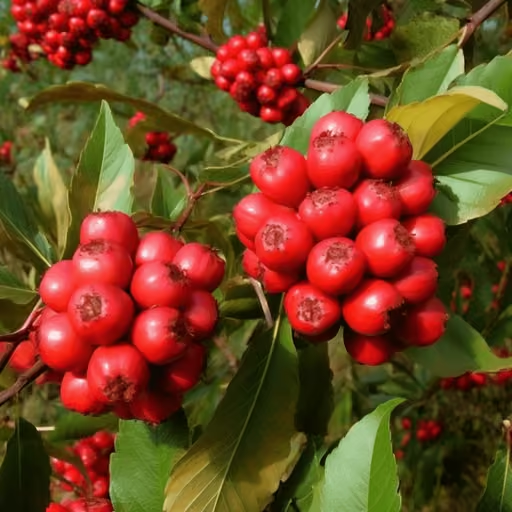
Chinese hawthorn berry widens the coronary arteries, feeding more blood to the heart and muscles, and eases the squeeze in the vessel walls.
Eucommia bark, whose torn leaves stretch silken rubber threads, relaxes arterial walls to lower their squeeze and improves flow into tissues.
Works on magnesium: the mineral every reaction that handles ATP depends on.
Guipi Decoction has human evidence for iron status and oxygen carriage: how well the blood carries oxygen.
Works on magnesium: the mineral every reaction that handles ATP depends on.
The shiitake cap lowers the fats traveling in the blood - a mushroom prized in Japanese kitchens for the same property that earns its place here.
Maca, the Andean root grown above tree line, lifts how the day feels from the inside — steadier spirits, renewed drive, a brighter morning.
Works on cardiolipin: the signature fat of the mitochondrial inner membrane, which the energy chain needs to assemble.
Lion's mane's hericenones and erinacines prompt the brain to make nerve growth factor, keeping memory sharp and thought quick with the years.
Bitter melon's charantin and polypeptide-p lower blood sugar after a meal and make the cell answer insulin sooner, so fuel reaches the muscle.
Moringa leaf's isothiocyanates and chlorogenic acid blunt the sugar spike that follows eating, so energy stays level through the afternoon.
Mulberry leaf holds DNJ, an iminosugar that slows starch breaking down in the gut, so blood sugar rises gently after a meal instead of surging.
Works on magnesium: the mineral every reaction that handles ATP depends on.
Its quercetin-rich polyphenols switch on antioxidant genes and help kidney cells hold through stress.
In a randomized, triple-blind, placebo-controlled trial in women, resveratrol raised the mitochondrial DNA copy number of granulosa cells against placebo.
Works on magnesium: the mineral every reaction that handles ATP depends on.
In randomized human trials urolithin A improved muscle strength and mitochondrial health; in animals with diabetic heart disease it raised SIRT1.
Cholecalciferol, the sunlight vitamin, opens the gut to calcium and hands it to the skeleton; the frame stays dense and upright beneath every step.
Menaquinone reaches the testis itself and turns up the enzyme that begins testosterone's making from cholesterol, the first step on its path.
Purple yam, a source of diosgenin, the saponin that carries its activity.
Lowers cortisol, raises thyroid hormone in subclinical hypothyroidism, and raises testosterone while cutting body fat.
In a randomized three-week human trial, Cordyceps militaris raised VO2max and pushed back the point of exhaustion.
Ginger's heat compounds, shogaol and gingerol, are the actives; in rats, ginger extract calmed inflammation in the brain's reward center.
Olive oil's sharpest phenol works by mild provocation - a small oxidative nudge that leaves the cell with more antioxidant capacity and more mitochondria than it started with.
Isorhamnetin, the flavonol of sea buckthorn and ginkgo, raised the activity of four energy-chain complexes in obese mice, and their fatty liver improved.
In an animal model of sun-driven skin aging, lycopene raises SIRT1, a cell-maintenance enzyme.
Works on cardiolipin: the signature fat of the mitochondrial inner membrane, which the energy chain needs to assemble.
Supports the building of new mitochondria, the cell's engines.
Nicotinamide mononucleotide has a controlled study for mitochondrial oxidative capacity: how much fuel the cell can actually burn.
In brain-cell cultures under inflammatory challenge, ginsenoside Rg1 and ginseng extract returned activated microglia, the brain's immune cells, to rest.
In ten people crossed on and off it, lowered CRP and IL-6 while mitochondria ran harder.
Works on magnesium: the mineral every reaction that handles ATP depends on.
In controlled trials it lowered thyroid antibodies by reducing oxidative stress.
These grades describe the maturity of the published science for each ingredient — not a claim that the product treats, cures, or is clinically proven for any goal. These statements have not been evaluated by the Food and Drug Administration. This product is not intended to diagnose, treat, cure, or prevent any disease.