
An organism that colonizes the stomach has solved the problem the stomach exists to create.
H. pylori survives the acid by manufacturing an alkaline microenvironment around itself (urease) and stays by binding the mucosa directly (adhesion), so chemistry and attachment are two targets, not one, and clearing either alone merely cedes the ground back. On the host side the gut barrier and the fuel it runs on count for as much as the organism (glutamine), since a mucosa that repairs itself is harder ground to hold.
Digestion, swallowing function, reflux and competing fungal overgrowth (candida) occupy that same territory and are routinely mistaken for one another. Past the organism the formula holds the ground it clears: immune support and resistance to infection, antioxidant defense and the master antioxidant the lining draws on, body-wide inflammation calmed, sleep and recovery, with blood-sugar handling, insulin sensitivity, cholesterol and weight settling as the gut does.
Nine primary pathways of the twenty-three it targets. A pathway opens only on graded, published evidence, shown with its source at the ingredient level.
Educational only. Not evaluated by the FDA.
The story of Helico (Gastric Colonization Defense)
Helico — ‘The Eviction’ — for the tenant that moved into your stomach and changed the locks. Your stomach is a furnace. It holds an acid strong enough to break down almost anything you swallow, and for most of history it was assumed that nothing could live there. Then one organism was found doing exactly that (Helicobacter pylori). It is carried by roughly half the people on earth, most of whom never know it, and it has traveled with our species since before our ancestors left Africa. It survives the furnace with a trick. It makes an enzyme that turns urea into ammonia, wrapping itself in a small cloud of alkali the acid cannot reach (H. pylori urease, the acid shield). It burrows into the protective mucus, and then it grips the stomach lining with hooks built for the purpose (H. pylori adhesion). Once it holds on, the lining becomes its home, and the inflammation it keeps up there becomes yours. You know the pattern even if nobody named it. The gnawing that arrives before a meal. The fullness after a few bites. The burn that climbs toward your throat at night, when the valve at the top of the stomach loses its timing (reflux, the esophageal valve), and the swallow that no longer feels automatic (swallowing function). Digestion as a whole stops feeling effortless (digestive function). The disruption does not stay in the stomach. An inflamed gut loosens the seal of its own lining (the intestinal barrier), and in the altered terrain that follows, yeasts that normally live in small numbers can overgrow (fungal overgrowth, candida). The lining that has to heal runs on one preferred fuel above all others (glutamine). Helico is an eviction served in the right order. It dissolves the tenant’s shield and loosens its grip on the lining, so the stomach can be reclaimed. Then it restores what the tenancy damaged: the seal of the gut wall, the fuel the lining heals on, the balance that keeps yeast in its place, and the quiet, automatic rhythm of digestion you used to take for granted. Past the organism, the formula holds the ground it clears. Immune support and resistance to infection keep the territory, while antioxidant defense and the master antioxidant are what the lining draws on as it rebuilds. Body-wide inflammation calms; sleep and recovery return. The fat-burning hormone, blood-sugar support, insulin sensitivity, fasting insulin, cholesterol and weight all settle as the gut does — because a stomach under occupation taxes everything downstream of it, and nobody connects the two until the occupation ends. The locks were changed without your permission. Now they change back.
Built for the gastric environment — H. pylori colonization and mucosal resilience.
★ 5.0 · 200:1 · $99










The studies, ingredient by ingredient
Eleven Chinese cities ran the same test at once and agreed: added to the standard course it took clearance from 59% to 77% in the 303 people who finished.
Pooling eight randomized trials in 1,087 people, Lactobacillus reuteri added to eradication therapy raised clearance from 72.6 to 80.0 percent.
The only botanical an independent review calls effective standing alone: 56% of people clear after 60 days against 4% on placebo.
One in five cleared at eight weeks against one in fourteen on placebo, in 522 people never treated before.
Breath test, stool antigen and both stomach-lining markers fell over eight weeks in the people given broccoli; none moved in the placebo arm.
Across 19 studies and 5,036 patients, adding it to standard therapy improved clearance and cut diarrhea, bloating and nausea.
Thirteen trials across ten databases: clearance up about a fifth, ulcer healing a seventh, with almost no scatter between studies.
Bifidobacterium bifidum ranks first of its whole genus for clearance potential in an umbrella review.
One condition decides whether it transfers: the trials used native bovine lactoferrin, and this bacterium preferentially feeds on the iron-free form.
In 98 patients it eased the side effects that make a course hard to finish.
The most potent thing in this formula — at a fifth of the next best's concentration — and active against strains that resist antibiotics. The catch is processing: garlic aged for months in alcohol showed no activity at all, and boiling costs two to four fold.
Tested against fifteen bacteria taken out of patients' stomachs rather than out of a freezer, and it produced the lowest killing concentration anywhere in this formula. It also protected rat stomachs by about four fifths, with no toxicity even at the highest amount tested.
Blocks the bacterium's acid-survival enzyme and works in synergy with metronidazole; eight days cut gastritis in rats.
It quieted the genes for grip, movement, acid-shielding and toxin.
Oregano's carvacrol blocks the acid-handling enzymes this bacterium depends on, impairing the matrix it hides in.
Top three of thirty herbs screened against six strains — one standard and five taken from patients. The screen names the part, which most do not: the aerial parts, not the root.
The stems themselves, tested directly, were strongly inhibitory to all six strains.
Clove flowers were strongly inhibitory to all six test strains. It surfaces only under the older botanical name — searching the modern one returns nothing, which is why the label carries both.
Substantially active against six strains, with separate work independently reporting it inhibits both the bacterium and the gastritis it causes. Two unrelated sources pointing the same way, both in cell culture.
Its emodin blocks an enzyme the bacterium needs, confirmed by a solved crystal structure.
Strong across ten strains, resistant and susceptible alike.
Loosened H. pylori's grip without killing, calmed inflammation and abolished its threefold rise in DNA damage.
Seventy-seven foods were screened against the enzyme this bacterium cannot live without, and this one won outright. Gerbils drinking it for six weeks showed less gastritis.
Propionibacterium freudenreichii is the one probiotic here tested entirely on its own.
Among the three most potent extracts against fifteen bacteria taken from patients' biopsies.
One of only three actives among fifty traditional herbs put through the same test — and the forty-seven failures are the reason the three are believable.
Named among five of fifty plants rated strong in a Taiwanese screen, and separately documented as a source of an established anti-H. pylori quinone. Two countries, two unrelated groups.
In culture, taheebo inner bark yielded a constituent strongly active against H. pylori, and a second, lapachol, active at a moderate level.
The leaf works two to three times harder than the root, and both work.
One of five plants of fifty rated strong in a Taiwanese screen.
Smoked plum's lignan stopped more than ninety percent of the bacterium's swimming, which is not incidental.
A harder test than reference strains, passed.
Alpinia officinarum's galangin quiets the inflammatory signal through a named kinase route and loosens the bacterium's grip on the lining.
Active against two laboratory strains and nine taken from patients, and selective with it.
Twelve of the fourteen mushrooms in this screen inhibited the bacterium — and this species was not among the ones individually named. It carries the panel's floor, not a figure of its own, and we will not pretend otherwise.
Polygonum cuspidatum's resveratrol inhibits the organism in culture.
Apium graveolens's apigenin blocks the same fat-building enzyme the rhubarb anthraquinone targets, arriving from an unrelated chemical family — two different molecules converging on one enzyme.
Whole extract inhibited more than 45% of clinical isolates.
Capsaicin blocks the inflammatory alarm two steps upstream of the alarm itself, and lowered the same signaling in infected mice.
Measured in human stomach tissue rather than in a dish: in a placebo-controlled trial, the lining's inflammatory-cell score improved significantly, with less oxidative DNA damage in the biopsy itself.
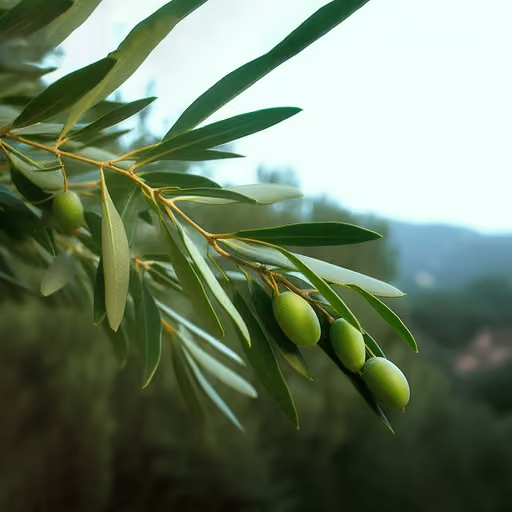
The hydroxytyrosol-rich leaf extract killed all seven strains it met.
These grades describe the maturity of the published science for each ingredient — not a claim that the product treats, cures, or is clinically proven for any goal. These statements have not been evaluated by the Food and Drug Administration. This product is not intended to diagnose, treat, cure, or prevent any disease.