The liver can rebuild its own mass. The question is what takes that capacity away.
The liver's capacity to regenerate is real but conditional — it is lost as repair becomes scar. That conversion runs through transforming growth factor beta (TGF-β), acting on the cell that lays down matrix (stellate cell). Upstream, the ethanol-metabolizing enzyme generates the oxidative load (CYP2E1) the master antioxidant must absorb (glutathione). Function is read downstream as fat clearance and ammonia handling. Where scarring has advanced the consequences turn mechanical — resistance rises in the portal circulation, veins distend and fluid collects (portal pressure, varices, ascites) — so tissue renewal (regeneration) and the restraint of fibrosis must advance in step, renewal into an unrestrained scar serving only to enlarge it.
A liver that regenerates rather than scars changes the whole account. Digestion and the gut barrier decide what it is asked to process; antioxidant defense and calmed inflammation decide what survives the processing; energy sensing, cellular cleanup and growth and survival signaling run the rebuilding. Blood-sugar handling, fasting insulin, weight, the kidney, immune support, TNF-α and inflammatory signaling move with it, while brain adaptability and anxiety are where a clearing liver is felt rather than measured.
Sixteen primary pathways of the thirty-two it targets. A pathway opens only on graded, published evidence, shown with its source at the ingredient level.
Educational only. Not evaluated by the FDA.
The story of Liver Regenerator (Hepatic Restoration)
Liver Regenerator — ‘The Phoenix’ — for the organ that can rise from its own damage. The Greeks told of a titan chained to a rock, whose liver was torn away by an eagle every day and grew back every night. Whoever first told that story knew something true. Few organs can regrow what they lose. Your liver can. Remove a large part of it and what remains will divide and rebuild, back toward its full size, within weeks (hepatocyte proliferation). It needs that power, because few organs work in harsher conditions. The liver is the body’s refinery (liver integrity). Nearly everything you absorb passes through it first to be processed, and some of that processing is dangerous in itself. One of its enzymes, an oxidative furnace, turns certain substances into something more reactive than they were before it touched them (CYP2E1 bioactivation). The liver answers with its own antioxidant, the molecule that puts out those sparks before they burn (glutathione). It also clears what the rest of the body cannot. Every protein you digest leaves nitrogen behind in a form that is toxic to the brain (ammonia), and the liver runs a cycle that converts it into something harmless for the kidneys to flush (the urea cycle). When that cycle falters, the toxin reaches the brain and clouds it (hepatic encephalopathy). Here is where a phoenix can fail. Fat settles into the liver cells first (hepatic steatosis). Then a quiet cell type that normally stores vitamins between the others wakes up and starts laying scar (hepatic stellate cells). A master signal drives them, a mason who keeps laying brick long after the wall is finished (TGF-β, Smad). Scar replaces working tissue (liver fibrosis), and if it keeps spreading, the road ends at a wall no regeneration can climb (cirrhosis). Liver Regenerator works on both sides of that fork. It backs the liver’s own capacity to rebuild, and restocks its antioxidant reserve. It tempers the furnace. It helps the nitrogen cycle keep pace. And it asks the scar-laying cells to stand down, so that when the liver rebuilds, it rebuilds liver. Where scarring has already advanced, the consequences stop being chemical and turn mechanical. Portal pressure rises, veins distend where blood is forced to find another way around, and abdominal fluid collects because that pressure has nowhere else to go. When the organ can no longer keep pace with nitrogen, the liver-related confusion that follows is a liver problem wearing a neurological mask, and it is named that way here for exactly that reason. Reducing scarring is therefore not cosmetic — it is what keeps every one of those from arriving. Around it, digestion and the gut barrier decide what the liver is asked to process, calmed inflammation and inflammatory signaling decide what survives the processing, and energy sensing, cellular cleanup and growth and survival signaling run the rebuilding itself. Immune support holds the line, while blood-sugar support, fasting insulin, weight and the anxiety that lifts when a scan finally reads better are where a clearing liver is felt rather than measured. Every phoenix needs the right kind of fire. Keep yours a renewal, not a ruin.
Built for the liver — clearance, fat handling, and fibrotic signaling.
★ 5.0 · 200:1 · $99


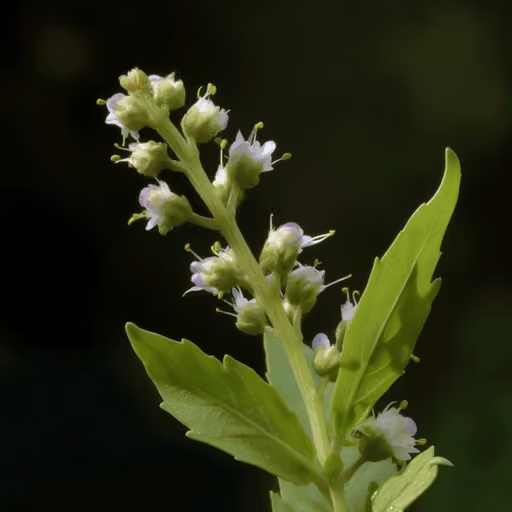


The studies, ingredient by ingredient
Eleven meta-analyses of 99 randomized trials in 5,546 people converge on reduced liver fat.
From Ampelopsis vine tea: normalizes ALT, AST and GGT, the signs of intact, uninjured liver cells.
In 120 patients, randomized against placebo, ultrasound-confirmed liver fat fell, with ALT alongside.
In 60 people with raised ALT, blinded against placebo for twelve weeks, ALT and GGT came down.
Milk thistle's core: a five-trial meta-analysis on liver enzymes; the most-trialed liver botanical.
A triterpene from Terminalia arjuna. Gavage-dosed: SIRT1/AMPK raised through NAD+, autophagy triggered, the gut barrier restored.
Black chokeberry, among the richest anthocyanin fruits of the northern woods, raises the antioxidant response that sets the liver's defensive enzymes to work.
Brazilian carqueja: liver-regeneration evidence, with liver enzymes falling in its own toxicology screen.
CYP2E1 measured in liver tissue by western blot and cut dose-dependently, with the alcohol-clearing enzymes rising as it fell.
Hwangchil, the golden-lacquer tree of Korea's southern coast, whose leaf calms TGF-beta, the signal that orders the liver to lay down scar tissue.
Proof by subtraction: block the cell's self-clearing program and galangin's effect on fatty liver vanishes, in the animal and in the cell alike.
Two thousand years of use, and the modern measurement agrees on one thing: TGF-b1 messenger RNA in hepatic tissue falls dose-dependently.
Sambacaita, a Brazilian mint, prompts liver cells to divide and replace lost tissue — hepatocyte regeneration and repair in the aging liver.
Two laboratories found liver inflammation down, antioxidant defense up, and gut bacteria restored toward normal.
Two independent laboratories, both oral: Nrf2 raised with HO-1 and NQO1 behind it, and NF-κB lowered.
Liver tissue assessed directly: NF-kB and JNK inhibited, autophagy regulated through AMPK/mTOR, glycolipid metabolism improved.
Gan Huang Cao, the ditch-stonecrop of Miao healers in Guizhou, prized as a liver tonic, whose polyphenols switch on the liver's antioxidant response.
Korean red pine, whose bark and needles have long been drunk as tea, lends proanthocyanidins that support hepatocytes renewing lost liver tissue.
Polydatin, from Hu Zhang, the knotweed root, restrains the enzyme that forges toxins in the liver, calms NF-kB inflammation and strengthens antioxidant defense.
Fu Ling, the pine-root fungus of Chinese pharmacy: it steadies gut signals to the liver, curbs toxin activation, quiets NF-kB and raises antioxidant defense.
Lowered liver fat and liver enzymes in 41 people with fatty liver, each their own control in a crossover trial.
Taraxasterol, a triterpene of dandelion root, old bitter of liver lore, curbs the enzyme that makes toxins harsher, calms NF-kB and lifts antioxidant guard.
Fed to rats for ten days before 70% of the liver was removed, thymoquinone lowered liver damage and raised its ATP; after the same surgery, regrowing cells divided faster.
These grades describe the maturity of the published science for each ingredient — not a claim that the product treats, cures, or is clinically proven for any goal. These statements have not been evaluated by the Food and Drug Administration. This product is not intended to diagnose, treat, cure, or prevent any disease.