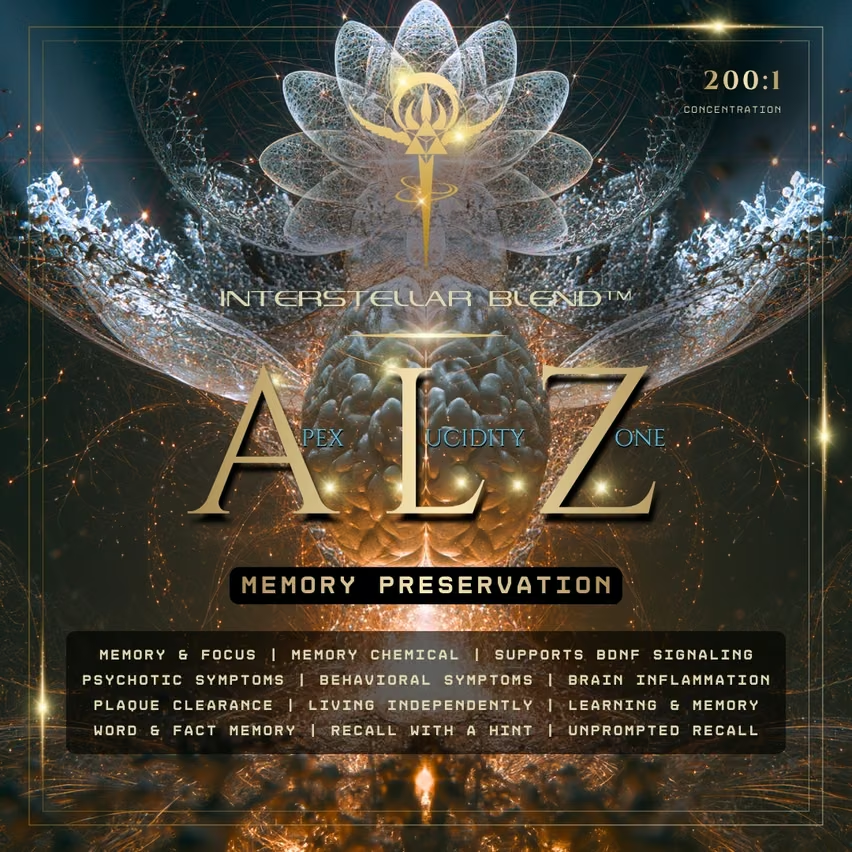
Memory and independent function are kept or lost across decades, not months.
Memory is not one faculty but several, failing at different rates and for different reasons. Some are about time: holding something for a moment, recalling the day just passed (immediate and recent memory). Some are about access: recognizing what is put in front of you, retrieving unprompted or with a cue (recognition memory, free and cued recall). Others are domains of their own — the store of words and facts, finding your way, and remembering to do a thing later (semantic memory, spatial navigation, prospective memory). Encoding depends on acetylcholine (ACh); the tissue it runs through is maintained by brain-derived neurotrophic factor (BDNF); and both run on membranes built from lipid (omega-3). Against them run three processes that advance independently — inflammation in brain tissue (neuroinflammation), extracellular plaque (amyloid), and the intracellular tangles that track decline more closely than plaque does (tau). What presents clinically is broader than memory: behavioral and psychotic symptoms carry much of the burden. The outcome that matters is whether a person goes on living independently.
Three further things decide how the rest of it reads. Barrier integrity governs what reaches brain tissue at all; quieted overexcitation is the glutamate load that damages neurons while they are still working; and acute confusion is the state in which every domain above fails at once, and it is tracked separately for that reason. Follicle oxidative stress shares the oxidative mechanism.
Nineteen primary pathways of the twenty-three it targets. A pathway opens only on graded, published evidence, shown with its source at the ingredient level.
Educational only. Not evaluated by the FDA.
The story of ALZ (Memory Preservation)
ALZ Neuroprotector — ‘The Long Memory’ — for a mind that stays whole across the years. Memory is a house with many rooms, and they do not all dim at once. There is the room that holds a phone number for the few seconds it takes to dial it (immediate memory). The room that holds what happened a few hours ago (recent memory), and the one that keeps the facts you know without remembering where you learned them (semantic memory). The room that lets you find your way home (spatial navigation), and the one that reminds you, at the right moment, to do what you meant to do (prospective memory). Some memories come back on their own (free recall), some need a hint (cued recall), and some only announce themselves when you meet them again (recognition memory). Beneath every room runs the work of taking something new in and bringing it back out (learning & memory). The families of people whose memory is failing notice the house changing long before anyone names it. First the small things: the missed appointment, the story told twice. Then changes that are harder to put into words, in mood, patience and behavior, the part families feel first (neuropsychiatric symptoms), and sometimes perception itself slipping (psychotic symptoms). What they are really watching is independence: the ability to run a day, a checkbook, a kitchen (functional independence). Inside the brain, the story is written in a few pieces of machinery. A messenger carries memory between neurons (the cholinergic system, acetylcholine), and it is among the first to thin. A growth factor lets neurons branch and form new connections (BDNF). A fat the brain is built from keeps its membranes supple (omega-3, EPA and DHA). And two kinds of debris accumulate with the years: sticky plaques between neurons (amyloid-β burden) and tangles within them (tau pathology), while a slow, smoldering inflammation, the brain’s own fog, spreads through the tissue (neuroinflammation). All of it shows up in the one measure everyone understands, how clearly a person can think (cognition). ALZ Neuroprotector is built to keep the house lit. It protects the memory messenger and feeds the growth factor, supplies the fats the brain is built from, and helps clear the debris and lift the fog, so that every room stays open for as long as it can. Three further things decide how the rest of it reads. Barrier integrity governs what reaches brain tissue at all. Quieted overexcitation is the glutamate load that damages neurons while they are still working. And acute confusion is the state in which every domain fails at once — tracked separately because it is not decline, and must never be mistaken for it. Follicle oxidative stress shares the same oxidative mechanism, and the hair sometimes tells the story before the memory does. The outcome that matters through all of it is living independently: the mornings that still belong to you. The long memory is the one worth keeping: your own, and the one shared with the people who love you.
Neuroprotection — defends memory & neurons.
★ 5.0 · 200:1 · $99












The studies, ingredient by ingredient
In a 90-day randomized, double-blind, placebo-controlled trial of 130 healthy adults under stress, ashwagandha root improved recall on the Cambridge memory tests and cut errors in recalling patterns.
Brahmi of the Ayurvedic tradition: across five randomized trials in older adults with memory decline, Bacopa improved memory and thinking.
Pooled across four randomized trials, curcumin raised blood levels of BDNF, the growth factor neurons rely on to form and keep their connections.
Pooled across randomized trials in adults, flavanols improved verbal fluency: reaching into what you know for the right word, against the clock.
Pooled across placebo-controlled trials in people with memory decline, the standardized leaf extract EGb 761 improved memory and thinking and the everyday activities of living.
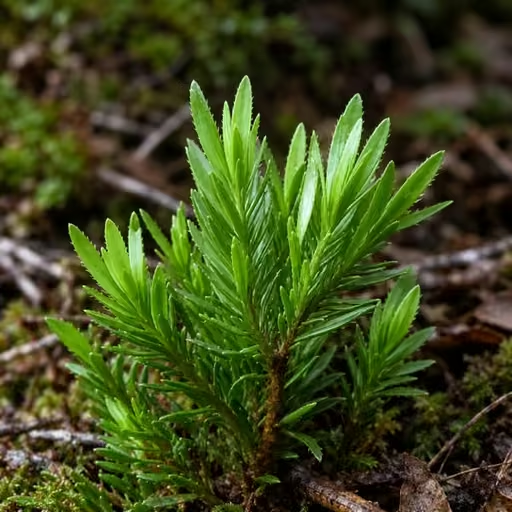
Huperzine A, from Chinese club moss, holds acetylcholinesterase at bay — more of memory's messenger stays in the gap between neurons, and for longer.
Across fourteen randomized trials in hospital, melatonin, pooled with its relative ramelteon, lowered the risk of delirium, the sudden fog that can hasten memory decline, by 39 percent.
In a randomized, double-blind, placebo-controlled trial of adults with mild memory decline, Panax ginseng improved cognitive performance.
In a 22-week randomized, double-blind trial of 54 older adults with memory decline, saffron matched a prescription comparator on the standard scales of memory and thinking.
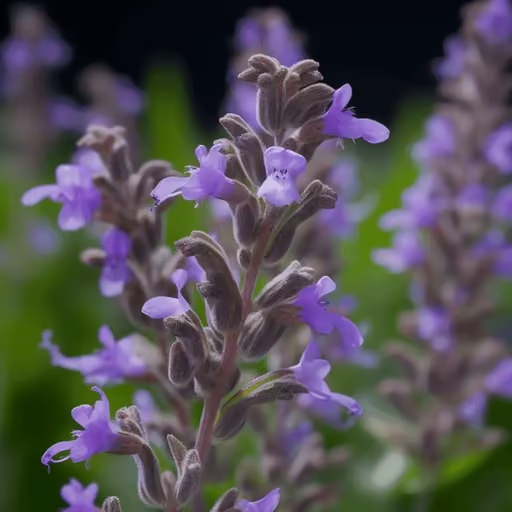
Sage leaf's volatile oils guard acetylcholine from breakdown, and the effect shows up where it counts — in quicker word recall and a clearer head.
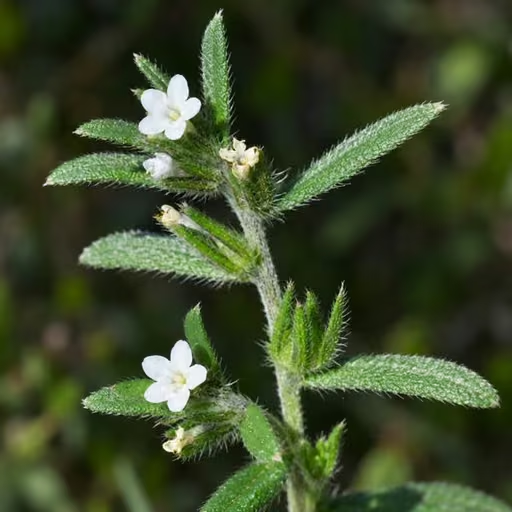
In a randomized, placebo-controlled trial of 106 university students, a month of thyme leaf reduced everyday lapses in remembering to do what they had planned.
In older adults with early memory changes, twelve weeks of wild blueberry improved paired-associate learning and word-list recall against a placebo drink.
Greater galangal, the ginger-family rhizome: in a randomized, double-blind, placebo-controlled crossover study of 59 healthy adults, it sharpened alertness and sustained attention.
In healthy mice, Bacopa monnieri sharpened recognition of new objects and increased new neurons and BDNF in the brain's memory center.
A plant source of omega-3: in a randomized, placebo-controlled trial of 88 healthy adults, Ahiflower oil raised blood EPA, one of the two long-chain omega-3 fats, within four weeks.
Pooled across randomized trials, carnosine and its fellow histidine dipeptides improved delayed recall on the Wechsler Memory Scale.
In rats given an inflammatory challenge, gotu kola protected spatial learning, shortening the time and the path to the hidden platform in the water maze.
Over 18 months in a placebo-controlled trial of 40 adults aged 51 to 84 without dementia, a bioavailable curcumin improved verbal and visual memory and attention.
In a six-month randomized, placebo-controlled trial of adults 55 and over, supplemental DHA reached the brain: DHA in the fluid around it rose 28 percent against placebo.
Over twelve weeks in a randomized, double-blind, placebo-controlled trial, green tea catechins (EGCG) improved performance on a continuous-attention task.
In a randomized, double-blind, placebo-controlled trial of 100 adults, tian ma improved scores on the ADAS-cog scale of memory and thinking and raised blood BDNF.
In a 24-week randomized, double-blind, placebo-controlled trial, the leaf extract EGb 761 eased the agitation, apathy and anxiety that can accompany memory decline.
Added to standard care in a 12-week double-blind, placebo-controlled trial, ginkgo extract lowered scores on the Scale for the Assessment of Positive Symptoms.
Over 42 months in a small randomized, double-blind, placebo-controlled trial of older adults with memory decline, glucoraphanin from broccoli sprouts held up immediate and delayed recall better than placebo.
In a 16-week double-blind, placebo-controlled trial of 30 older adults with mild memory decline, lion's mane improved scores on a standard cognitive-function scale.
In a randomized, double-blind crossover trial of 24 adults, peppermint oil sharpened accuracy on demanding attention and mental-arithmetic tasks and eased mental fatigue.
Pooled across 58 randomized trials in adults, omega-3 EPA and DHA improved perceptual speed, how fast the mind takes in what it sees, at moderate certainty.
In a double-blind, placebo-controlled trial, guarana seed improved attention, memory and alertness within hours.
In a 12-week randomized, double-blind, placebo-controlled trial of 93 adults aged 55 and over, purple perilla leaf improved word recall, delayed recall and word recognition.
In a randomized, double-blind, placebo-controlled trial of 53 older adults, Polygala root raised total scores on the CERAD battery of memory and thinking, with gains in word recognition and naming.
In a yearlong placebo-controlled trial in older adults with memory decline, resveratrol lowered MMP9, an inflammatory enzyme, in the fluid around the brain.
Rosemary's carnosic acid and a breath of its cineole aroma keep acetylcholine in play, so recall quickens and names come more readily to mind.
In two double-blind, placebo-controlled crossover trials in healthy young adults, Spanish sage oil improved immediate word recall within hours.
In a randomized, double-blind, placebo-controlled trial, standardized kanna improved measures of thinking alongside mood.
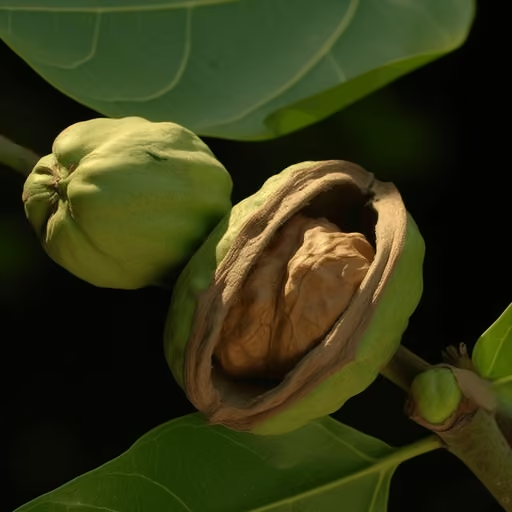
Walnuts, the one nut rich in plant omega fats, lower LDL cholesterol in the blood and nourish the neuronal membranes that memory depends on.
In laboratory tests, baicalein from Baikal skullcap stopped tau from forming fibrils and broke up amyloid-beta fibrils, the two proteins that clump in the aging brain.
In mice bred to build tau tangles, benfotiamine, a fat-soluble form of vitamin B1, cut the tangles in the cortex and hippocampus by about 60 percent and lengthened life.
In mice given excess iron, the standardized gotu kola extract ECa 233 eased the memory deficit it caused in the water maze.
In rats given a toxin that impairs memory, temulawak rhizome extract improved spatial memory in the water maze.
In rats under simulated weightlessness and isolation, dammarane sapogenins from ginseng stem and leaf restored water-maze learning and working memory.
In brain immune cells challenged in the laboratory, the whole-leaf extract EGb 761 calmed the inflammatory response.
In sleep-deprived mice, saponins from notoginseng stem and leaf improved spatial learning and memory in the water maze.
In mice bred to build amyloid plaques, trehalose improved learning and memory and reduced amyloid deposits in the hippocampus; in their neurons, it halved the amyloid-beta released.
These grades describe the maturity of the published science for each ingredient — not a claim that the product treats, cures, or is clinically proven for any goal. These statements have not been evaluated by the Food and Drug Administration. This product is not intended to diagnose, treat, cure, or prevent any disease.