
A cell that has stopped dividing has not stopped acting.
A senescent cell is not inert: it resists its own retirement and secretes a persistent inflammatory program into the tissue around it (SASP), which is how a small number of cells impose a systemic cost through inflammatory transcription (NF-κB). Clearing them restores the dividing reserve (stem cell). The one-carbon economy that maintains the epigenome runs beneath them (DNA methylation, SAMe, betaine, homocysteine), down to its riboflavin cofactor (FAD); between them they set the tempo at which cellular aging is inscribed.
Clearing a cell that will not leave changes the tissue it was sitting in. Body-wide inflammation and the inflammatory alarm fall as the secretion stops, and bone health, memory and focus, blood flow, the kidney and plaque clearance are where that is felt. Antioxidant defense, the master antioxidant and antioxidant enzymes protect what remains; energy sensing, cellular cleanup and recycled mitochondria rebuild it; immune support, recovery and weight settle on the same account.
Eleven primary pathways of the thirty-five it targets. A pathway opens only on graded, published evidence, shown with its source at the ingredient level.
Educational only. Not evaluated by the FDA.
The story of Senolytic (Senescent Zombie Cell Clearance)
Senolytic — ‘The Reaper’ — for the cells that refuse to die. Every day, some of your cells reach the end of their useful life. Most of them leave quietly. A few do something stranger. They stop dividing but refuse to die, and they linger in the tissue like zombies (senescence): no longer working, never leaving, and far from harmless. A zombie cell is noisy. It pours out a stream of inflammatory signals into the tissue around it (the SASP, the senescent secretome), driven by the master inflammatory switch inside it (NF-κB). The noise damages healthy neighbors and pushes some of them toward the same zombie state. One lingering cell becomes a cluster. A cluster becomes a tissue that ages faster than you do (cellular aging), and the reserve of stem cells that should replace worn tissue runs down with it (the stem cell pool). Aging also leaves marks in a subtler place: on the DNA itself. Chemical tags called methyl groups sit on your genes like annotations, telling each cell which pages to read and which to skip (DNA methylation). With age, the annotations drift, and the drift can be read as a clock. Keeping those annotations accurate depends on a supply line that most people never hear of. The body passes single carbon atoms from one vitamin to the next (the one-carbon folate cycle), with a flavin vitamin keeping the cycle turning (riboflavin, FAD), toward a universal donor that hands the methyl group to the gene (SAMe). A backup route supplies the same donor through another nutrient pathway (betaine, BHMT). Where that line falters, a byproduct piles up at the fork in the road (homocysteine). Senolytic is the reaper for those cells. It helps clear the zombies that should already be gone, quiets the noise from those that remain, and keeps the annotation supply line running, so the donor is supplied, the fork stays clear, and the genome keeps its instructions accurate. Clearing cells that will not leave changes the tissue they were sitting in. As worn-out cells go and the inflammation they broadcast calms, bone health, memory and focus, blood flow and the kidney are where it is felt first, with plaque clearance behind them. Antioxidant defense and the antioxidant enzymes protect what remains, cell survival decides what stays, the mitochondrial pore holds, and worn mitochondria are recycled rather than tolerated. Energy sensing runs the program, eased ER stress lets an overworked cell catch up, and developmental signaling is what a dividing reserve answers to once there is room to divide into. Immune support, recovery, weight and anxiety settle on the same account — and female fertility, which depends on a cell that has waited a long time in good condition, reads it most sensitively of all. Aging is not only about what the years add. It is about what the body stops clearing. Senolytic keeps clearing it.
Cellular renewal — supports the body's clearance of worn-out (senescent) cells.
★ 5.0 · 200:1 · $99




The studies, ingredient by ingredient
Reduced senescence markers and extended lifespan in aged mice; an early human study found fewer senescent blood cells.
In the first human senolytic trial, dasatinib plus quercetin reduced senescent-cell burden in fat tissue.
In a randomized, placebo-controlled trial in middle-aged adults, improved muscle strength and mitochondrial health by recycling damaged mitochondria.
In aged mice, quieted senescent secretions and cleared senescent cells, improving function and prolonging survival.
Curcumin cleared senescent human intervertebral-disc cells and reduced their SASP by down-regulating the Nrf2 and NF-κB pathways — shown in laboratory study.
The curcumin metabolite o-vanillin cleared senescent human disc cells and lowered SASP factors linked to inflammation and back pain.
In cells and mice, berberine reduced senescence markers (p16, SA-β-gal), suppressed gero-conversion, and extended the lifespan of naturally aged mice by ~16%.
Aged rat kidneys and human cells grown old in culture both quiet down under apigenin: it shuts off the master inflammation switch that senescent cells use to broadcast damage to their neighbors.
Kaempferol pulls the same lever apigenin does, and in senescent skin cells it clamped down hard on the inflammatory cytokines those cells release.
Human skin cells age two ways in culture, by dividing too often and by oxidative wear, and green-tea EGCG held off both.
Silences senescent cells rather than killing them, blocking their inflammatory broadcast.
Rutin belongs to that silencing half as well: across laboratory models it muffled the inflammatory output of senescent cells.
In head-to-head panels on senescent human cells, luteolin showed senotherapeutic activity alongside quercetin, fisetin and kaempferol.
Part of a quercetin, rutin, luteolin and hesperidin combination studied in people for markers of immune aging.
Brain support cells under oxidative stress did not tip into senescence when ginsenoside Rg3 was present, and the inflammatory signals they pour out stayed down.
In human vessel-lining cells aged by oxidative stress, genistein held senescence back by quieting the TXNIP-NLRP3 inflammation axis.
Olive-derived oleuropein reduced senescent (SA-β-gal-positive) cells and p16INK4a expression and attenuated SASP markers — shown in laboratory study.
Push the brain's support cells into premature aging with oxidative stress and baicalein delays the slide, damping the inflammatory chatter that normally follows.
Piperlongumine, a long-pepper alkaloid, showed senolytic activity in cultured senescent cells by raising reactive-oxygen species and destabilizing anti-apoptotic (BCL-2 family) proteins.
Pterostilbene, the blueberry relative of resveratrol, slows aging in human skin cells by cleaning up their mitochondria and switching on the cell's own antioxidant defense, with inflammatory signaling falling as it does.
Silybum marianum (milk thistle) extract showed senotherapeutic-like activity on senescent human skin cells, reducing senescence markers and SASP.
Sulforaphane is what broccoli makes when you chew it, and it kept human fibroblasts dividing longer by firing up their built-in antioxidant response and easing oxidative damage.
Honokiol (from Magnolia) reduced cellular senescence in microglia, lowering SA-β-gal, p21 and neuroinflammatory signaling.
Reversed aging in damaged human stem cells: the senescence marker faded, division resumed, inflammation fell.
Alpha-mangostin (from mangosteen) decreased high-glucose-induced senescence in human endothelial cells, lowering SA-β-gal and IL-6 while restoring SIRT1 — shown in laboratory study.
A triterpenoid complex from Ganoderma lucidum (reishi) selectively eliminated senescent human cells via caspase/mitochondrial apoptosis and reduced senescence markers, in vitro and in vivo.
Panax notoginseng oligosaccharides reversed replicative senescence in human dermal fibroblasts — lowering SA-β-gal, p16 and p21 and restoring proliferation and collagen synthesis — shown in laboratory study.
Taken by mouth by aged mice, chlorogenic acid held back vessel-wall senescence, lowering p53, p21 and PAI-1 and raising SIRT1 and eNOS through the NRF2 defense.
Indole-3-carbinol (from cruciferous plants) showed senolytic activity, selectively triggering apoptosis in senescent mouse and human fibroblasts.
The dipeptide carnosine reduced senescence markers (SA-β-gal) and SASP factors via the Nrf2/HO-1 pathway and rejuvenated senescent human fibroblasts — shown in laboratory study.
Α-Lipoic acid prevented senescence, cell-cycle arrest and inflammatory signaling in fibroblasts by reducing oxidative stress and SA-β-gal — shown in laboratory study.
Turns senescent cells' own iron handling against them, quieting their inflammatory signals; with quercetin it slowed aging measures in mice.
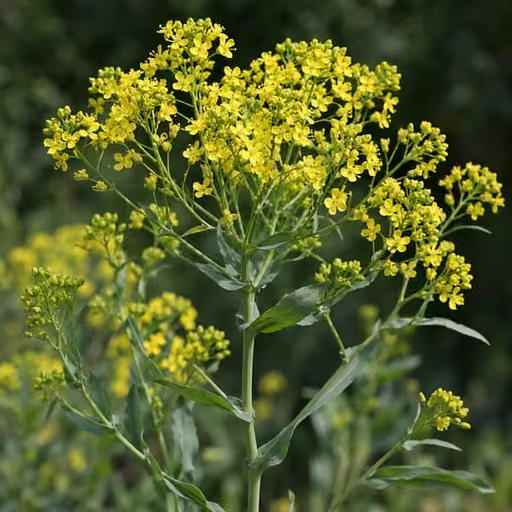
Woad leaf extract keeps human skin cells dividing past the point where they would usually shut down, with the aging brakes eased and the inflammatory output lower.
Spermidine, a polyamine autophagy inducer, retarded senescence of human stem cells (SA-β-gal and ROS down) via SIRT3; an early human trial reported reduced immune-cell senescence with lower lymphocyte p16.
In mice and cultured cells, taurine lowered senescence markers and the SASP (SA-β-gal, p16/p21).
Among 777 adults aged seventy and older in the three-year do-health randomized trial, omega-3 on its own slowed three epigenetic aging clocks.
These grades describe the maturity of the published science for each ingredient — not a claim that the product treats, cures, or is clinically proven for any goal. These statements have not been evaluated by the Food and Drug Administration. This product is not intended to diagnose, treat, cure, or prevent any disease.