
Pain can outlast the injury that caused it.
Persistent pain is a volume problem more than a signal problem: inflammatory transcription sustains it (NF-κB) and an alarm complex amplifies it (NLRP3), holding the gain high after the cause has gone. Territories differ — a vasoactive peptide in headache (CGRP) riding a spreading cortical wave, nerve-generated pain, and widespread pain without a lesion. Excitability itself is tuned at potassium channel gating (K-ATP), and the peptide carrying the signal centrally is its own target (substance P); body-wide inflammation, immune balance, joint comfort and migraine all move with these. Opioid requirement is the measure that matters clinically.
Pain held at volume costs the rest of the system. Body-wide inflammation keeps the gain high, carried by IL-6 and TNF-α and renewed by inflammatory signaling and monocyte recruitment; antioxidant defense and the master antioxidant are what tissue spends holding out. Blood flow and the gut barrier change what reaches the nerve, a calmed histamine response covers a route often missed, and recovery, anxiety, estrogen balance, the reproductive axis, sperm quality, blood-sugar handling, cholesterol, resistance to infection and weight are what return when it comes down.
Fourteen primary pathways of the thirty-two it targets. A pathway opens only on graded, published evidence, shown with its source at the ingredient level.
Educational only. Not evaluated by the FDA.
The story of Ascendance (Nociceptive Volume Control)
Ascendance — ‘The Reprieve’ — for pain that has outstayed its purpose. Pain is supposed to be a messenger. It arrives, it tells you something is wrong, and once you have listened it is meant to leave. The pain that wears people down is the kind that never got the message that it could go. It lingers in joints that ache on waking, in nerves that burn without a wound, in heads that pound for a day at a time. None of that is weakness, and none of it is imagined. It is an alarm system with its volume stuck. The loudest of those alarms sits inside almost every cell: a master switch that, once thrown, orders the whole inflammatory chorus into song (NF-κB). Beside it waits a second alarm that needs no germ at all, only stress and debris, and that can ring on and on in a body with nothing to fight (the NLRP3 inflammasome, the sterile alarm). Together they keep a low fire burning through the whole body (systemic inflammation), and the immune system, meant to be a trained guard, starts treating its own tissue as the intruder (immune modulation, the trained restraint it has lost). The nerves carry their own chemistry of pain. One messenger announces an injury to the spinal cord (substance P). Another widens the vessels around the brain and turns an ordinary headache into a day lost (CGRP, the headache peptide). A migraine is not a bad headache; it is a different event (migraine). There is pain with no damage beneath it at all, the whole-body ache of a nervous system turned up too high (fibromyalgia). And there is the slow burn that starts in the longest nerves first, the feet and hands, when blood sugar has spent years wearing at them (diabetic neuropathy). Ascendance answers at each of those sources. It quiets both alarms and cools the fire they fuel. It restores the immune system’s restraint. It calms the messengers that carry pain up the nerve, and it opens a channel on the nerve itself that tells it to fire less readily, a gate where many pain signals meet (KATP channel opening). And it looks after the hinge that pain so often lives in (joint function), so that movement becomes a pleasure again instead of a negotiation. Relief is measured in what you no longer need to reach for (opioid consumption), and in the ordinary hours that come back when the volume finally drops. Pain held at volume costs the rest of the system. In migraine it rides a cortical spreading wave, which is the reason a whole day goes and not merely the head. Around it, antioxidant defense is what tissue spends holding out, the gut barrier changes what reaches the nerve, and monocyte recruitment renews the inflammation that keeps the gain high. What comes back when the volume drops is everything that had been quietly paying for it — recovery, estrogen balance, the reproductive axis and sperm quality, blood-sugar support, cholesterol, weight, and the resistance to infection a body under constant alarm stops maintaining. Anxiety falls last, and most noticeably. A reprieve is not a pause in the sentence. It is the sentence lifted.
Pain & inflammation annihilator.
★ 5.0 · 200:1 · $99








The studies, ingredient by ingredient
Carnitine's acetyl form shuttles fatty acids into mitochondria and donates acetyl for acetylcholine — metabolic repair and nerve plasticity, together.
Alpha-lipoic acid binds heavy metals, regenerates glutathione and, across a meta-analysis of controlled trials, lowered fasting glucose and body weight.
Boswellic acids shut down the leukotriene enzyme and the master swelling switch, and protect knee cartilage.
The Q-SYMBIO trial shows mortality and functional benefit in heart failure, with blood-pressure support alongside.
Curcumin silences the master switch and the alarm complex behind joint swelling, spares cartilage from its enzymes, and wakes the cell's own shield.
Ginger lowered systolic pressure 6.36 mmHg and diastolic 2.12 mmHg across pooled trials, with the effect strongest in people under fifty and within the first eight weeks.
Treated fat cells released more fat and raised both lipases; blocking the adrenaline kinase erased the effect.
Works on opioid requirement: pain signals turn up their own volume as they pass through the spinal cord; quieting that amplifier means less of the signal arrives to be medicated.
Works on opioid requirement: pain signals turn up their own volume as they pass through the spinal cord; quieting that amplifier means less of the signal arrives to be medicated.
Thymoquinone quiets swelling, lifts the cell's shield, relaxes vessels and lowers sugar and blood fats.
Pomegranate lowered blood pressure in human trials and improved the carotid artery wall, the vessel measurement that tracks stroke risk.
Its caffeic acid esters turn down the master swelling signal and switch on antioxidant defenses.
Depletes substance P, the pain neuropeptide, from nerve endings.
Paeoniflorin persuades overactive T cells to stand down and restores the cells that balance them.
In women who were deficient, correcting vitamin D raised the rate of early pregnancy by about half again, a risk ratio of 1.53.
In rats after head-and-neck radiation, pretreated salivary glands made more saliva and less scar.
The bitter king of Ayurveda: andrographolide dampens autoreactive white cells and the cytokines they release, so immunity finds its balance.
The root it is drawn from, given by mouth to rats with induced migraine, cut pain behavior 61.2% and lowered CGRP, the headache peptide, in blood and brain.
The root it is drawn from, given by mouth to rats with induced migraine, cut pain behavior 61.2% and lowered CGRP, the headache peptide, in blood and brain.
Green pods of the Malabar coast — cardamom eases the force on artery walls and damps the inflammatory switch that keeps tissues quietly swollen.
In a head-and-neck trial, a third of treated patients had no mouth ulceration; every placebo patient developed it.
Grape seed extract moved two numbers at once in pooled human trials: systolic pressure down 1.54 mmHg and resting heart rate down 1.42 bpm.
The tuber of an African vine, devil's claw brings harpagoside that stills cartilage-eroding enzymes and eases the ache of worn joints.
The drumstick tree's leaves temper overreaching white cells with isothiocyanates and flatten the glucose rise after carbohydrate.
Feverfew's parthenolide has human evidence for the nerve around the vessels: the network wrapping the brain's blood vessels, the structure every migraine mechanism acts through.
Pine bark procyanidins lift the cell's antioxidant defenses and inhibit the MMPs gnawing cartilage, so knees and hips move with less pain.
Soy's genistein and daidzein act as gentle plant estrogens in skin, restoring the collagen that thins after menopause and firming the face.
An Amazon vine, cat's claw carries oxindole alkaloids that teach overactive immune cells restraint while preserving the defense they owe.
Corrected homocysteine against placebo.
Works on cortical spreading depression: the slow wave of silenced neurons that opens a migraine.
Works on cortical spreading depression: the slow wave of silenced neurons that opens a migraine.
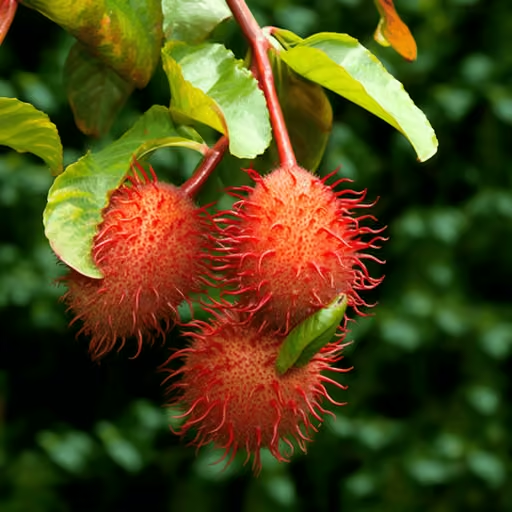
In mice, rambutan peel extract eased pain in chemical and heat tests, and an opioid blocker reversed the relief.
In mice, the root-bark extract cut pain responses by up to three quarters, through opioid and ATP-sensitive potassium channel routes.
These grades describe the maturity of the published science for each ingredient — not a claim that the product treats, cures, or is clinically proven for any goal. These statements have not been evaluated by the Food and Drug Administration. This product is not intended to diagnose, treat, cure, or prevent any disease.