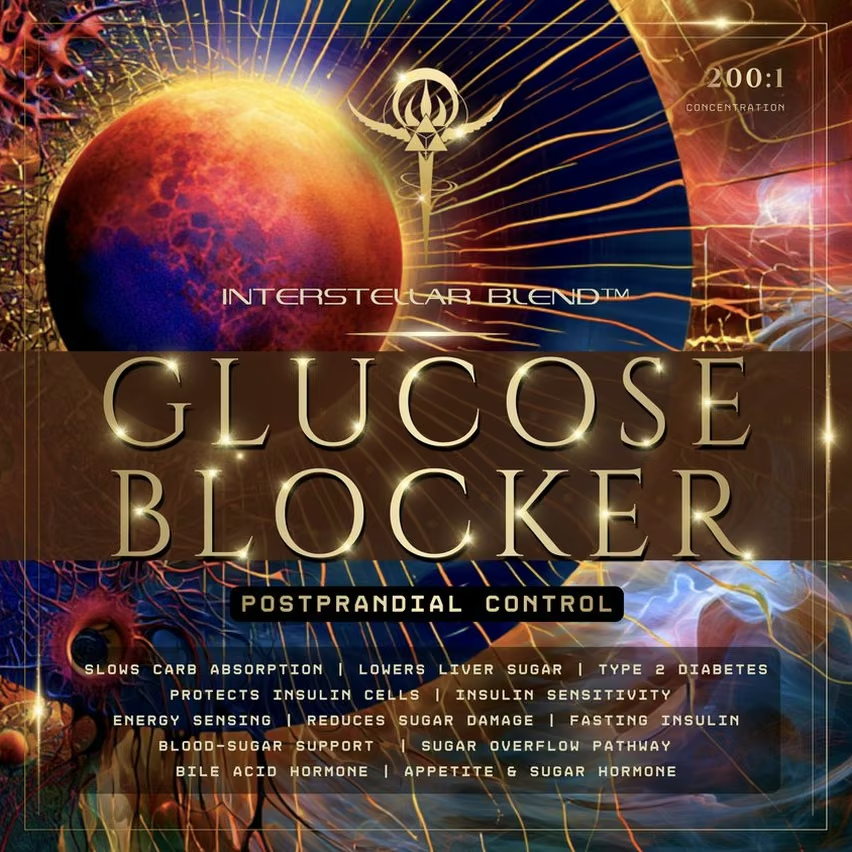
Most of a day's glycemic load is decided in the two hours after eating.
The postprandial rise has two sources: what is absorbed and what the liver adds. Both are addressed: carbohydrate absorption at the brush border (α-glucosidase) and hepatic output (gluconeogenesis), along with the cells that must answer the rise (beta-cell) and the tissue sensitivity to their signal (insulin). Glucose not cleared takes other routes — irreversible protein cross-linking (AGEs) and the overflow pathway (polyol) — while bile-acid signaling sets the fasting baseline (FGF19). Sustained postprandial load and the insulin resistance behind it are the state addressed (type 2 diabetes).
Flattening the curve after a meal is worth more than the number it produces. Curbed appetite follows a gentler rise through the appetite and sugar hormone; limited fat uptake and energy sensing decide what is done with what still arrives; gut-liver bile signaling sets the baseline the next meal starts from. Cholesterol, weight, estrogen balance and the reproductive axis all sit downstream of how steadily that curve is held.
Ten primary pathways of the eighteen it targets. A pathway opens only on graded, published evidence, shown with its source at the ingredient level.
Educational only. Not evaluated by the FDA.
The story of Glucose Blocker (Postprandial Control)
Glucose Blocker — ‘The Levee’ — for the flood that follows every meal. The plate is already in front of you. What happens in the next two hours shapes your metabolic future more than almost anything else you will do today. A meal rich in starch becomes a surge of sugar in the blood, and a surge is a flood. Levees exist for exactly this. The first wall stands in the gut. Starch cannot enter the blood until an enzyme at the lining snips it into single sugars (α-glucosidase, the starch enzyme). Slow that enzyme and the same meal arrives as a steady stream instead of a wave, and the burden of the meal falls (glycemic load). The second wall stands in the liver, which runs its own sugar factory and does not always know when to stop (hepatic gluconeogenesis). A messenger from the gut is meant to tell it to stand down once a meal arrives (FGF19, the gut-liver messenger). When the factory keeps running anyway, the morning shows it: insulin already high before you have eaten a thing (fasting insulin). The third wall is the answer itself. Insulin-making cells meet each surge (the pancreatic β-cell), and tissues that hear insulin clearly need less of it (insulin sensitivity). Surge after surge wears both down. That slow arithmetic has a name (type 2 diabetes), and it is written one meal at a time. Floods leave damage behind them, too. Sugar that lingers binds to proteins and caramelizes them (advanced glycation, AGEs). And when sugar overwhelms a cell, the excess is shunted down an overflow channel that produces a compound the cell cannot easily clear (the polyol pathway, sorbitol), part of the reason nerves, eyes and kidneys pay for years of high sugar. Glucose Blocker raises every wall at once. The starch enzyme slowed. The sugar factory told to stand down. The insulin makers protected, and the tissues listening again. The damage of the flood contained. Flattening the curve is worth more than the number it produces. Slowed carb absorption at the brush border is the first wall, and the bile acid hormone sets the fasting baseline the next meal starts from. Blood-sugar support is the whole object, and energy sensing decides what is done with whatever still arrives. Limited fat uptake keeps the surplus from being stored as it passes, cholesterol and weight move on the same steadiness, and estrogen balance with the reproductive axis sit downstream of how evenly that curve is held — because a body that spikes all day is making hormonal decisions it never meant to make. A levee does not stop the river. It decides where the water goes.
Post-meal glucose defense — carbs kept in check.
★ 5.0 · 200:1 · $99









The studies, ingredient by ingredient
Four levers at once: less sugar from the liver, a sharper insulin response, a woken energy sensor, fewer sugar-stiffened proteins.
Across 37 randomized trials in 3,048 people, fasting glucose fell 0.82 mmol/L and HbA1c 0.63%.
Across 37 randomized trials in 3,048 people, fasting glucose fell 0.82 mmol/L and HbA1c 0.63%.
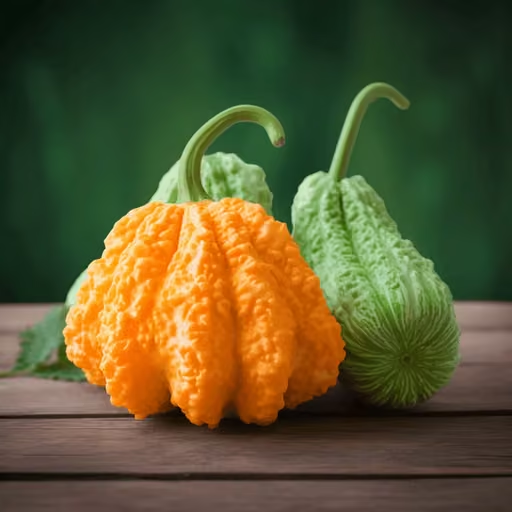
Bitter melon seed oil increased the crowns of dead fat cells in visceral fat and reduced the size of the fat pad itself.
Black-seed thymoquinone is one of the most trial-backed botanicals in metabolic health: meta-analyses show it lowers fasting glucose, HbA1c, LDL, triglycerides, blood pressure and body weight.
Pooled across 27 randomized trials in 2,194 adults, tea leaf lowered fasting blood sugar.
Pooled across 49 randomized trials in 3,038 adults, cinnamon bark lowered fasting insulin and insulin resistance.
Bitter melon holds back the gut's starch-digesting enzymes, and its polypeptide-p and charantin quiet the liver's overnight manufacture of glucose.
Mulberry leaf carries DNJ, an iminosugar that occupies alpha-glucosidase before starch can — the meal's glucose trickles into the blood instead of surging.
Mulberry leaf’s DNJ blunts starch digestion; a placebo-controlled trial improved glucose tolerance and lowered insulin — defending against the glycemic swings obesogens amplify.
Eleven human trials underwrite the tradition.
Thymoquinone restrains the liver's glucose release and slows the sugar bonds that toughen proteins.
A supercritical extract matched the reference stimulant's fat release at a small fraction of its concentration.
Swells into a gel that holds carbohydrate, so a meal's sugar arrives later and more gently.
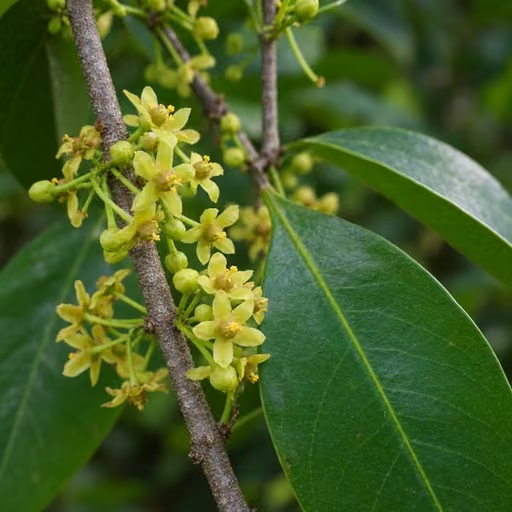
Its salacinol blocks starch-splitting enzymes, sending carbohydrate to the lower gut to release the fullness hormone.
Asks the liver to release less glucose between meals, and slows sugar's stiffening of proteins.
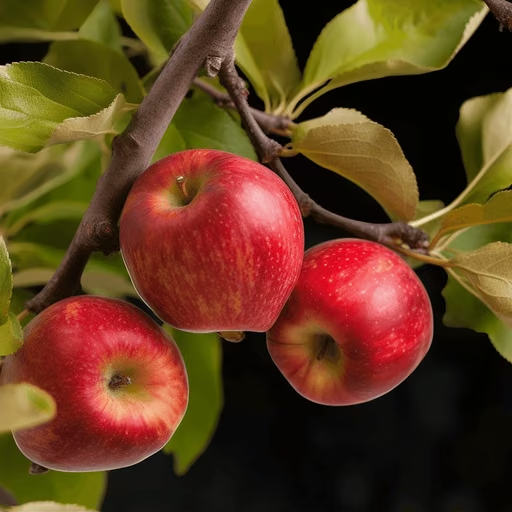
Procyanidins from the skin of the apple slow the enzymes that break carbohydrates down, so a sweet course arrives at the blood in a longer, lower curve.
The immune root appears here for sugar: less glucose poured out by the liver, better insulin response, fewer sugar-stiffened proteins, stronger beta cells.
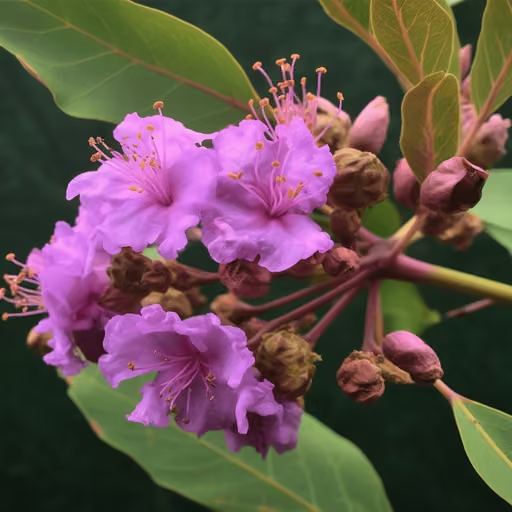
Crepe myrtle leaf, rich in corosolic acid, helps muscle cells pull glucose in from the blood, answering insulin more readily after a meal.
A bile-salt-active probiotic strain: the messenger between gut and liver.
The dark berry of northern hedgerows: its anthocyanins hold back the starch- and sugar-splitting enzymes, blunting the spike a plate of bread brings.
Green coffee's acid works here on sugar's arrival — slowing its uptake, sharpening the cell's hearing for insulin and lifting the hormone of fullness.
Cinnamon's polyphenols open the cell's door to insulin a little wider and temper the liver's habit of releasing sugar into the blood unbidden.
Turmeric's golden pigment eases the liver's sugar output, slows the glycation that ages proteins and shields the beta cells that make insulin.
The bitter-seeded legume whose soluble fiber slows starch in the gut, while its compounds lessen the sugar bonds that stiffen proteins over months.
Guava leaf tea, long drunk after meals in Japan and Asia, slows the enzymes that free sugar from starch, so the post-meal rise arrives gently.
The sugar destroyer: gymnemic acids dull sweet taste and crowd sugar's entry points in the gut, while protecting the cells that make insulin.
Red-steamed Panax root, whose ginsenosides quiet the liver's sugar-making enzymes, so fasting blood glucose rests lower through the night.
Makes muscle and fat cells more attentive to insulin, drawing glucose out of circulation faster.
Patagonian berry, dark as ink, whose delphinidins slow the transporters and enzymes that move sugar from the gut into the bloodstream.
On a sugar-steadying plan, this triterpene inhibits the gut enzymes that dismantle starch, lowering the rise after a carbohydrate meal.
The flavonol of onions and capers: it helps insulin do its work at the cell and turns down the enzymes by which the liver makes new glucose.
Grape skin's signature compound wakes the fuel sensor, lets tissue answer insulin more readily and tells the liver to hold its sugar back.
Genistein and daidzein from the soybean help cells respond to insulin with less effort, the glucose clearing from blood at a steadier pace.
Phaseolamin from the white bean blocks amylase, the enzyme that unlocks starch, so a share of the bread and potato leaves undigested rather than as sugar.
A trace mineral that insulin is stored with — it sharpens insulin's signal, restrains the liver's sugar release and slows glycation's stiffening.
A chalcone of the ginger family, drawn from Alpinia seed, that curbs alpha-glucosidase, so starch releases its sugar into the blood more slowly after eating.
Sprouted chickpea, not seed: dose-dependent bone protection in rats via the OPG/RANKL ratio.
Tea catechins, EGCG foremost, slow the starch-splitting enzymes in the gut and curb the glycation that toughens tissue proteins over the years.
Mandarin peel's polymethoxylated flavone checks the enzymes that liberate sugar from starch — a fruit rind that makes a sweet meal land softer.
Works on the sorbitol pathway: where surplus glucose overflows, draining nerve and lens tissue of antioxidant defense.
These grades describe the maturity of the published science for each ingredient — not a claim that the product treats, cures, or is clinically proven for any goal. These statements have not been evaluated by the Food and Drug Administration. This product is not intended to diagnose, treat, cure, or prevent any disease.